Translate

Blog of Strategic,General and Financial Management (English/Spanish)


Strategycorner is now expanding its content to include posts about General Management, Financial Management, Finance Transformation, Marketing and HR Management. Posts will be published in English or Spanish.


At the end of the blog there are different charts about Strategic Management in Spanish. In the archive area you could find a lot of posts about strategy and its execution in English/Spanish.

Jesús Peral
Executive MBA IE Business School, Madrid,Spain


Master in Strategic Management
IDE-CESEM Business School, Madrid, Spain


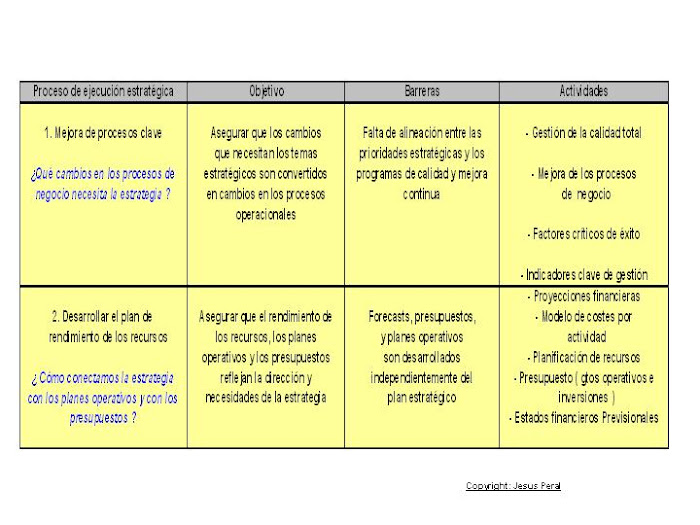
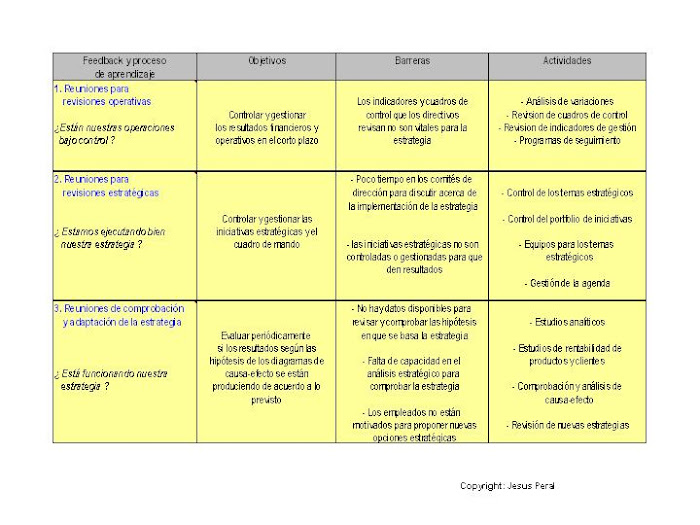
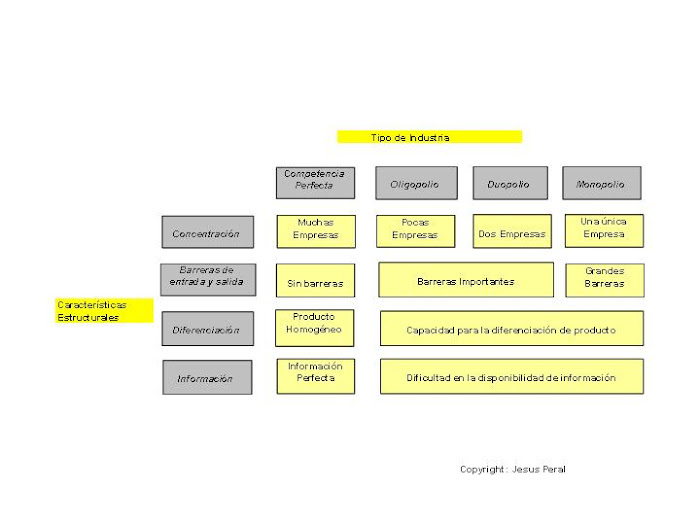
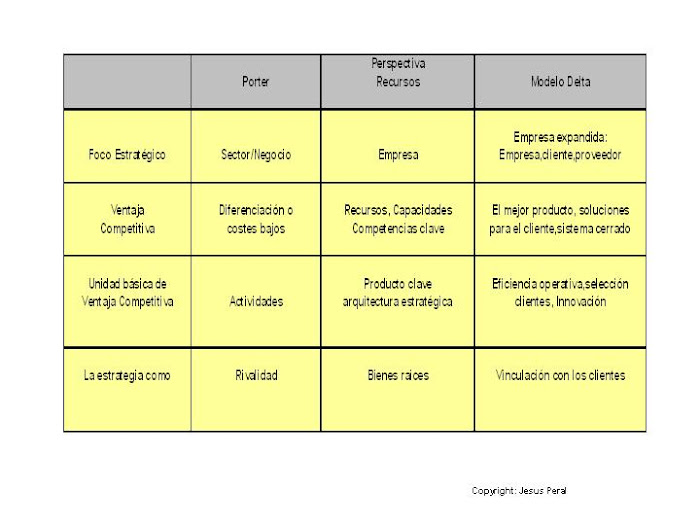
Find at the end of blog all charts related to Strategic Management topics commented in the posts


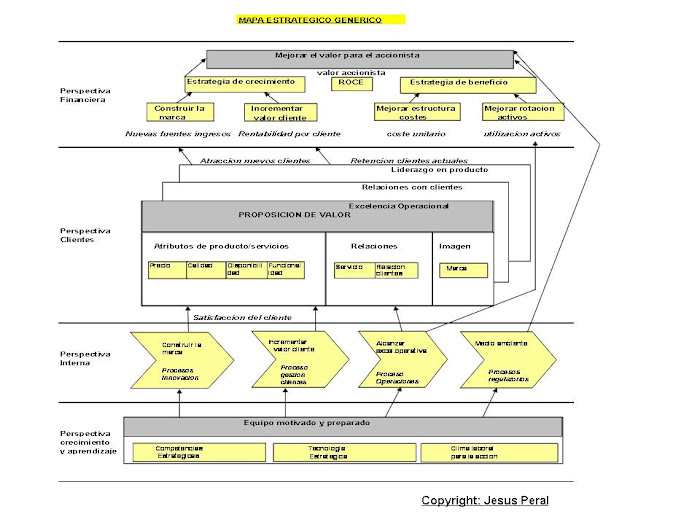
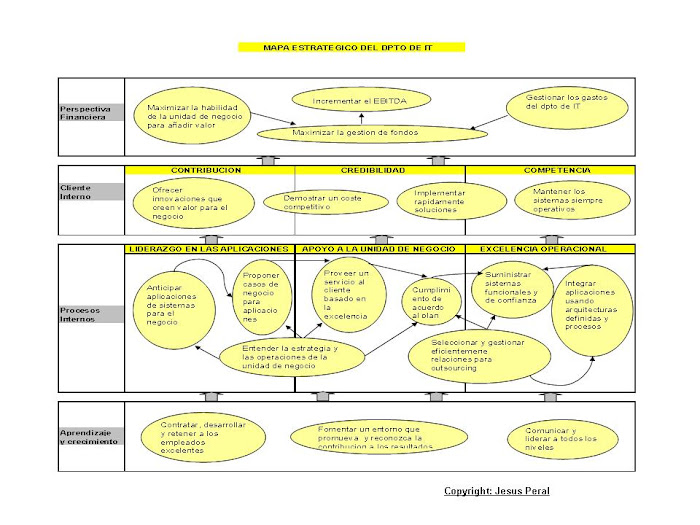
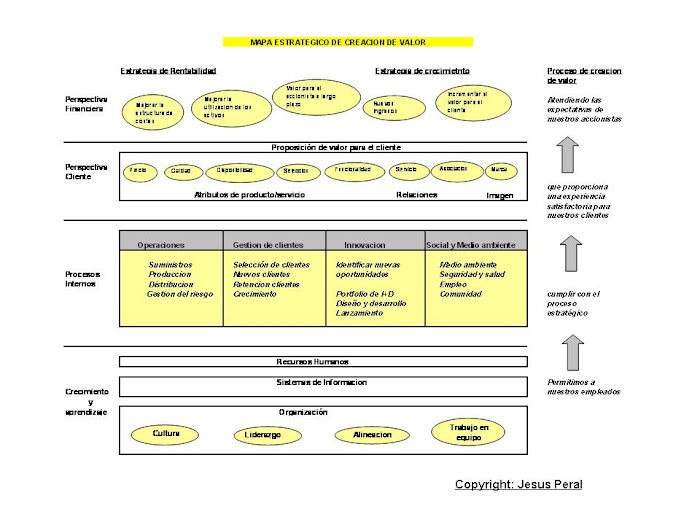
Mapa Estratégico Genérico/Strategy Map

Mapa Estratégico Genérico/Strategy Map
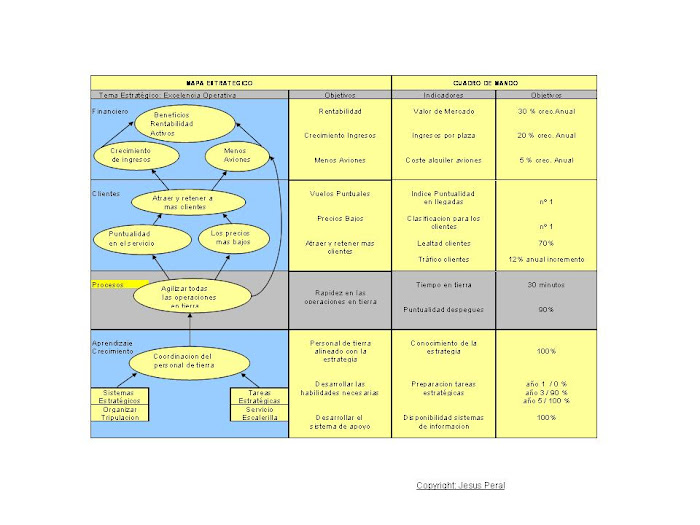
Mapa Estratégico Completo

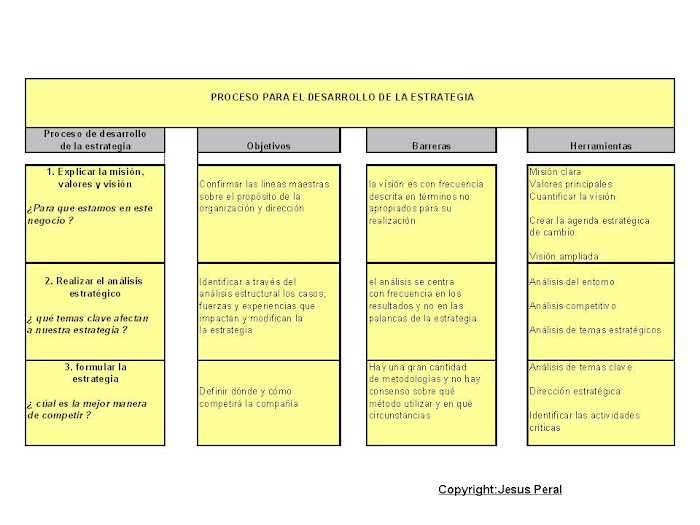
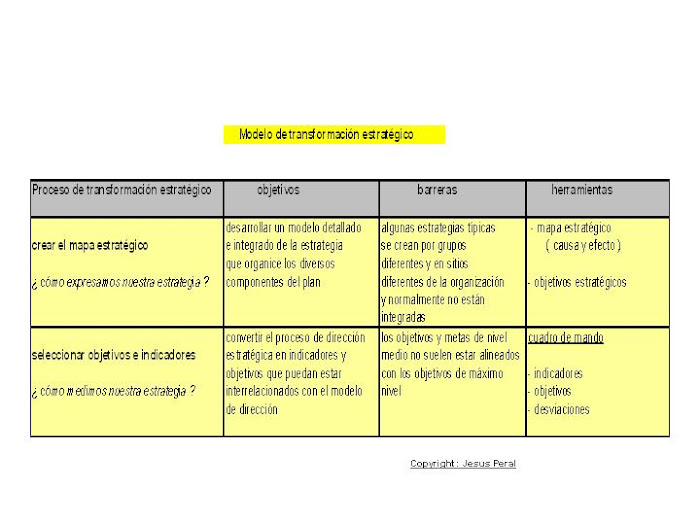
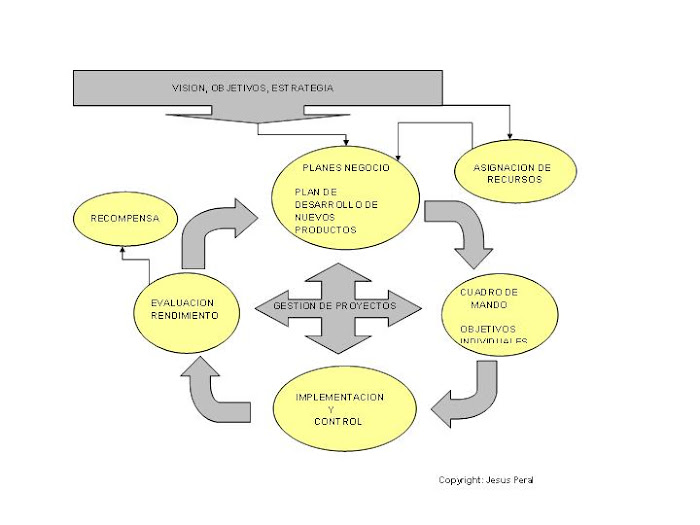
Modelo de Dirección Estratégica/Strategic Management Model

Modelo de Dirección Estratégica/Strategic Management Model
Modelo desarrollado en las entradas 1 a 100. Ver archivo del blog
Búsqueda personalizada
Mostrando entradas con la etiqueta Leadership (English). Mostrar todas las entradas

lunes, 28 de mayo de 2018

Are we suffering from excessive leadership?

In the vast majority of the management courses we can hear a lot of messages addressed to the executives talking about the excellence and competitiveness of the organizations in the global economy including the meaning of social responsibility, human capital, quality, strategy, innovation and knowledge management. But on top of this message there is one mentioned very often, the leadership.  In my opinion this is really a fashionable word, this post is about my reflection if sometimes we are suffering excessive leadership.

The question is the managers/executives have to catalyze the performance of the areas under their responsibility with a satisfactory working environment. We may call this as leadership but I would say that bosses and subordinates feel as such or better to say like executives and collaborators. It does not seem some feel like real leaders and the others followers but it could be considered as the leadership of subordinates, the so-called human resources displayed after achieving the desired outcome and fostering the best possible working environment.

Although the relationship is obviously hierarchical the above mentioned fashionable word is very common above all in the human resources scope. In my opinion we should start avoiding the “label” human resources and assume that you are a leader by the decision-choice of your followers instead of being a leader because you are the boss or you have attended to a seminar of leadership. To explain it a little bit more, just think about creativity where it depends on we are perceived as creative people and not because we have attended to creativity seminars. But the truth is there are a lot of talks about leadership and human resources but if we talk about resources the right word would be “managing” instead of “leading”.

This particular leadership can be exerted, of course, with different management styles, based on corporate culture, based on the personality of the individuals. Apart from the alterations of the professional values and competence shortage that can be found in the senior leaders/executives we could also focus some distress in their behavior probably due to the stress, anxiety, obsessions etc. In this context of this behavior “disorder” I would also add some level of excess of leadership. It is likely I could be wrong but sometimes I think that some leaders guided by this fashionable word or due to the excess of reading books about leadership or even by attending too much leadership courses or conferences they are overacting and assuming an excessive prominence.

Needless to remember that the leader to some extent is the superhero of the literature about management and that a lot of consultants, coaches and lectures are settled in the leadership skills as the essential quality of the senior executive.

Sometimes, I honestly think there is an excess of leadership and between all this worrying some kind of delirium. It is likely some leaders will be successful in the head. I cannot generalize but I read a lot of books on the subject during my career and I can remember striking statements. For example, the leader has to conquer the intelligence, the wish and the emotions of the followers. Another example, the leader is the one who achieves people do what they have to do. And the last example, managing people is difficult because they have sex, age and character. My conclusion on the above is that some authors think the leader is the hero and the followers are pure mediocrity. I could be wrong in my conclusion, apologize for it.

I also think the balance, moderation and common sense is the most common scenario. However, there may be some cases where some leaders, under questionable influences, show a behavioral distress with the following indications:

Permanent instructions and controls in the people management that remember the “old foreman style”.
Tendency to ignore the knowledge, initiative, ideas, opinions, merit, expectations and even the needs of the subordinates.
Tribute to the own ego and the appearances which leads to the inability to recognize errors or lack of competences and accept criticism.
Excess of self-esteem and sense of being indispensable and infallible utilizing the rest of people as mere resources.
Exaggeration about the past achievements and lack of realism to formulate new goals.
Desire to impose beliefs, values, feelings and habits in his/her collaborators beyond the desirable alignment of efforts.
Manipulating practices such as promises, motivating pep talks, lies, encouragement of dependency, “smoke screens”, etc.

But the question is why this excess of leadership? In my opinion there are different reasons. 
A lot of young executives/leaders attend to training and development programs where they claim a special talent, a promising future where they are requesting to take risks without fear of failure, being optimistic and positive. Where the need and relevance of leadership is emphasized and where they are told, in many cases, that without leadership the efforts of the teams will not deliver results. Maybe a dangerous adulation. 

What is then the fair point of leadership? The vast majority of leaders seem to know it, but in this context, I would say it is the one in which the leader forgets his/her condition of leader and, conversely, the subordinates feel themselves followers.

The final question would be, is there a treatment for the excess of leadership? The reply is probably there is but it would go through the detailed review of the mental models. But the fact is that some leadership training courses do not neutralize the “disorder” but foster it. Some cultures and management styles do not neutralize it either. Based on that the excess of leadership is frequently irreversible and the best would be to prevent it. Prevent it very carefully and with attention so that “the frog would not boil”. We need to insist that any artificial enhancement of the executive/leader could generate a dose of inhibition of valuable abilities in the subordinates/collaborators.


The q

martes, 3 de octubre de 2017

Do you want to influence? Be reliable


Leadership is influence. This could be an accurate definition about leadership. In my opinion, without influence there is no leadership. And influence is based in the trust inspired by the leader to his/her followers. I would say trust is the fuel of leadership as petrol is the fuel of a car. Without petrol the car cannot move, in the same way without trust you cannot lead. Without the trust of the followers there is no influence and without influence there is no leadership. I think this is an infallible equation about leadership.

The leader needs to be reliable to influence his/her followers. His/her effectiveness as a leader depends on this. The reliability of the leader is indispensable to influence in the organizational environment. If a leader is not reliable, the employees will not follow his/her vision and will not participate with enthusiasm to achieve the common goals and finally will not be committed with the organization.

Trust is the pillar for leadership. Leadership is based on the management of relationships and the relationships are based on the trust. Therefore without trust there is no connection between the leader and the followers.

In my experience the capacity of the leader to influence is due to the degree of acceptance in the organization. That is, to influence you need the followers believe in you, in your ethics, integrity, strength, competency.

However the reliability of the followers in the leader does not appear by chance. The leader needs to work hard on it. The actions of the leader will inspire trust in his/her followers.

The leader needs to establish through his/her behaviors, example and congruence, his/her credibility, the influence. You cannot achieve this with an isolated action but with a long way of integrity, ethic, personal congruence and competency. This process could last all the life and is the base for a durable influence that could go beyond the leader´s existence. Hence, we talk about the leader´s legacy.

As I said before without reliability there is no trust, and without the trust of the followers there is no leadership. But before the reliability of the leader, it comes first his/her personal credibility or congruence which makes him/her predictable in front of the followers.

I think reliable leaders are predictable. I would say one of the critical elements of the reliability of the leader is his/her predictability, in other words, others can predict his/her behavior.

When the followers can perceive in the leader stability and determination the trust in the leader emerges.

The leaders that want to be reliable in front of the followers need to set a clear and firm point of view and maintain his/her position without ambiguity. You cannot get the trust of other people by means of appeal you need to do it by means of words and facts. You need to be consistent and coherent with your behavior, with your values and beliefs showing integrity, that´s the only way to gain credibility in front of your teams. If the leader is constantly changing the vision, the instructions or rules he/she will lose reliability and therefore will not be trustable in front of the followers.

In my opinion the best indicator of reliability is the integrity. It is impossible to be reliable as a leader if you are not honest in your work and life. Integrity builds inevitably trust in the other persons. The integrity touches a fundamental aspect of the leader, his/her personality. The personality of the leader is the most decisive factor for the development and growth of the leadership. It is also the area used by the leaders to build influence in the followers. In my view, every reader will have his/her own opinion it is not the talent, the charisma, the intelligence, nor the knowledge the factors defining the leader but his/her personality.

Nowadays where the transparency of some governments and private companies is questioned overwhelmed by the corruption scandals, influence peddling and abuse of power the integrity is the cornerstone for those leaders who aspire to influence in the people. It is true that integrity alone is not enough for achieving the goals and resolving the problems but without it the rest falls down. Therefore integrity is an asset for the leaders.

When we act with integrity people perceive us like reliable persons and therefore we become predictable for them. People know what to expect from us so we reduce the level of ambiguity and uncertainty.

Based on the above could we build, let´s say, an equation for leadership? Let´s try. This equation would start with the coherence what leads to be predictable that in turn creates reliability which at the end inspires reliability in the followers becoming the real source of influence.

On the other hand the people trust in the leader who tells the truth with the focus in their values and beliefs. Therefore, in my view, a fundamental element for the leader to build his/her reliability is the coherence with his/her personal values. Everybody knows that the values define the things in which we believe. The values are essential part of any leader for the effective exercise of leadership. They shape the ethical sense of the person so the framework for the meaning of his/her experiences.

To the extent that the leaders manage to transform their personal values in deliberate actions they reinforce the leadership as they gain coherence. In this way their values act as platforms to renew their goals, take intelligent decisions, face challenges etc.

As a summary I would stress there is no influence as a leader without the reliability the followers confer to him. Without this reliability the leader does not have a base to influence in his/her followers. It is the reliability of the leader what builds the trust. As I said at the beginning of this post the trust is the fuel of leadership.


jueves, 4 de mayo de 2017

What do we need a leader for ?


In this post I would like to comment about leaders and leadership sharing my experience in one of the companies I have worked for based on the analysis of what happened and how the local CEO faced the situation.

In the year 2001 my company was involved in the launch of a new product. The worldwide marketing plan required a huge investment in trade and consumer marketing. The Senior Management team had great expectations in terms of volumes and profits. The competitive landscape was very difficult. All the teams were aligned to achieve a common goal. The finance department was ready to support sales and marketing efforts by managing credit limits, inventory levels and working capital investment.

The sales and distribution plans were very aggressive in terms of placement reaching new channels never used before. Financial projections were created assuming different scenarios but in all of them the expected results showed good margins and profitability.

3 months after the launch the results were really disappointed. The sales graphs did not show the expected sales levels with a dramatic downturn in different countries and also on a by customer basis. The local CEO and the international management team were really concerned.

The above situation could be familiar for a lot of the readers of this post. The main difference probably derives from the reaction and behaviour of the local CEO to cope with this situation.

The local CEO reacted very quickly to the downturn in sales. His reaction not only was a reaction of responsibility but also very sensible. Instead of adopting a defensive attitude, he accepted the reality.

One of the main elements of his success was his capacity to communicate with the marketing team as they felt it was their failure. An executive of lower level could have blamed and get away from the problem. But he understood their reaction and communicated with them very openly.

So what is the key message from this? It is fundamental to integrate all departments in a team effort to get the best possible result. The local CEO was able to assume the responsibility and take advantage of the potential errors. He faced the facts as they were using his emotional intelligence. He was very talented to get the best out of his team, helping them to develop and improve. His sincere interest in the others led to create a real sense of loyalty. He fostered a sense of sincerity encouraging all the employees to be open and honest with him. You could discuss with him and tell him you were not in agreement. He did not like cowards. He was especially sensible in assigning the right member of his team to the particular projects. The learning here is, the leader, ultimately, has the responsibility about what to delegate and to whom because if you choose the right person, at the end of the day, it is likely you will succeed. This also shows us the importance of the management of emotions in the leadership to be closer to the success when taking decisions. The emotional intelligence helped the local CEO to find the solution to the failure.

So what he did? Firstly, he assumed the error as his thing and did not blame his team but he considered them as part of the solution. He transformed the emotions into a source of information. The decisions need to incorporate emotions to be real. The good decisions take into consideration the emotions as a sign of respect for the people. The affective results end very close to the effective result. I think, nowadays, effectiveness depends more and more on the affection.

The emotions do not happen by chance, they follow a logical order that activates and deactivate them. They exist, we just need to find and organize them when needed. Obviously this requires some kind of effort. The idea here is to identify the emotions first, then understand them and finally channel them to the action.

In my opinion the leader of the 21st Century is no longer isolated in concrete areas as now he/she has to intervene in all the processes and is the cornerstone of the example of attitude, as he/she decides and acts, creates values and expectations. It is really the reflection of the change in the organizations.

The effort of the leader consists of understanding how to coordinate the company value in two directions: value creation for the shareholder and added value to the organization through strong policies of internal and external quality able to create quality of life. The increase of productivity is linked to the innovation in the ways of managing and leading the organization. New ways associated to the talent, involved in the creativity, understanding technology as a way for progress and continuous improvement. This task to link with the future has to be managed, from inside, by the leader with the expectation to overcome critical situations.

Lead the organization in the 21st Century means to manage successfully the competitiveness, trust, quality, culture, knowledge, behaviour, compromise and change.

The importance of the leader lies in the security of his/her behaviours. The 21st Century requires leaders emotionally stable. The leader needs to create the culture of the team, the culture of the organization, without overshadowing the capacity of each person in the common effort.

It is necessary to foster the direct leadership that impact in the knowledge of each member supporting the leader. This leadership requires compromise with the team, led and managed by the leader so he can inspire, motivate, listen, demand and analyse the decisions in depth, encourage the achievement of goals and cooperate in the development of his/her teams. For all of these it is required a great capacity of communication and adaptation.

The competitive advantage of the emotional leadership is the individualised treatment of the talents and the global knowledge of the activity. You cannot retain a talent if you don’t know the determinants and circumstances around the work. Only this way you can recognise the effort and the employee can be aware of it.

The emotional leader follows his/her people. He does not expect people follow him/her. He/she engages them giving example of coherence. Join the efforts to achieve a common goal and avoid using “we” and “they”. He ensures every employee feels passion for his/her work and for the company they work for.

You might get several learnings from the above. For example, the team is beyond its members. The responsibility has to be shared by all. We need leaders in all the teams and leaders that can train others leaders, and the most important, to teach then to understand none of us is worth more than the sum of all.


martes, 23 de junio de 2015

Leading by example: challenging coherence


The most difficult situation of someone who has the responsibility to be in charge of a team, as a leader, responsible o director, is to maintain aligned and coherent behaviors with the expectations of the observers for the daily performance.

In many occasions we have listened the expression “we lead by example”, but maybe we did not go deeper in the scope and sense this expression has for the organizational culture and for the management processes of the organization.

To be an example also means there is a fact that has to be followed or rejected and therefore those being an example must comply with some characteristics. I would like to stress the difference between setting an example and being an example as the conceptual implications are very relevant since set is a presentation of the ideal which must be done in reference of something whereas be refers to the actions that have to be imitated, replicated or followed by other members in the organization.

The example, in terms of behavior, is a conscious and deliberate action that intents to be followed and based on that we could question the validity of a leadership where the example is not derived from a personal and profound conviction to reinforce the action but to the contrary it could become a mask of incoherence and therefore it does not show the reality of the real meaning of the proposed action.  In other words, the leadership must go beyond  the example and have to include the possibility of the mistake as the leadership is neither to be an example nor to set an example but transforming by example, with the possibility that management becomes a new experience for all the members of the team.

Leadership is a necessary component in the processes of transformation and the example is an option which is available to be taken, improved or changed in a way the results meet the expectations and the goals of the organization.