Translate

Blog of Strategic,General and Financial Management (English/Spanish)


Strategycorner is now expanding its content to include posts about General Management, Financial Management, Finance Transformation, Marketing and HR Management. Posts will be published in English or Spanish.


At the end of the blog there are different charts about Strategic Management in Spanish. In the archive area you could find a lot of posts about strategy and its execution in English/Spanish.

Jesús Peral
Executive MBA IE Business School, Madrid,Spain


Master in Strategic Management
IDE-CESEM Business School, Madrid, Spain


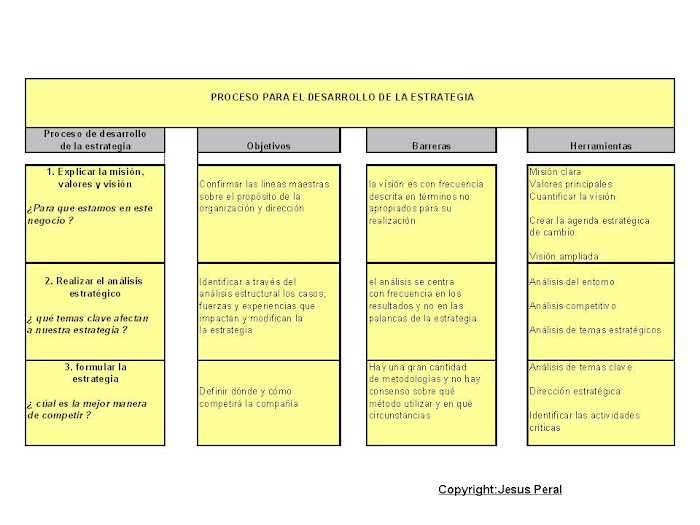
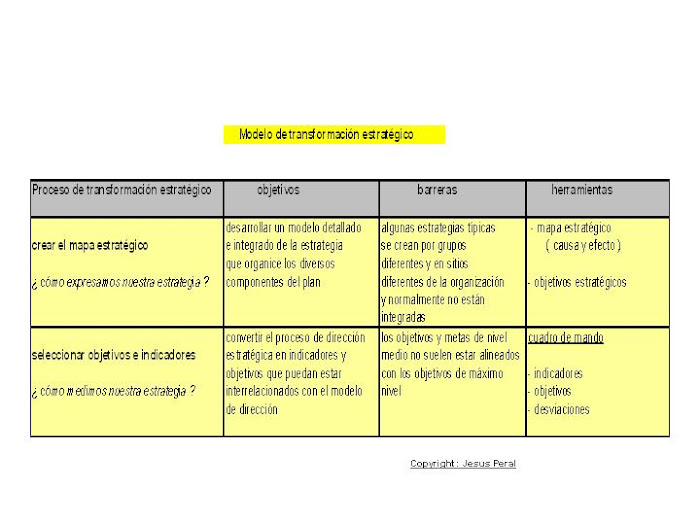
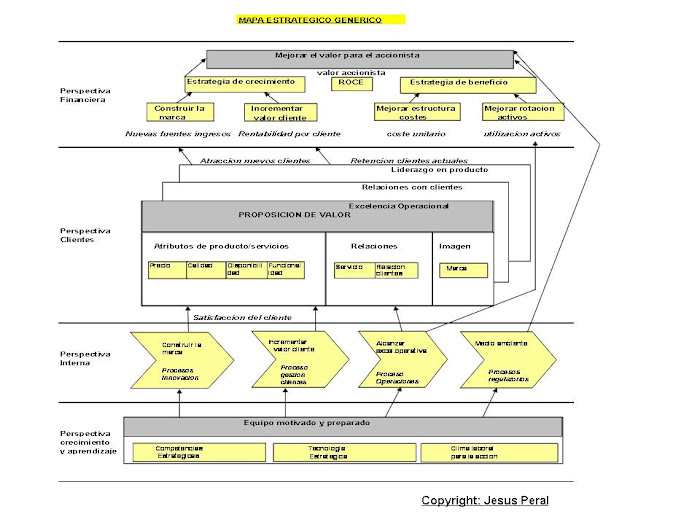
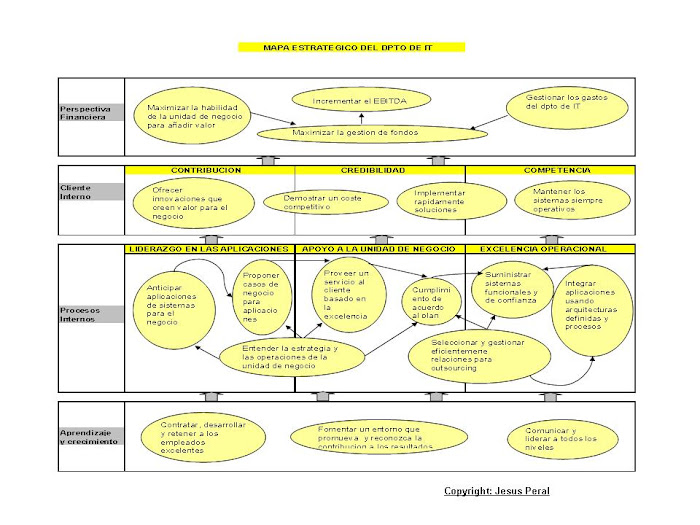
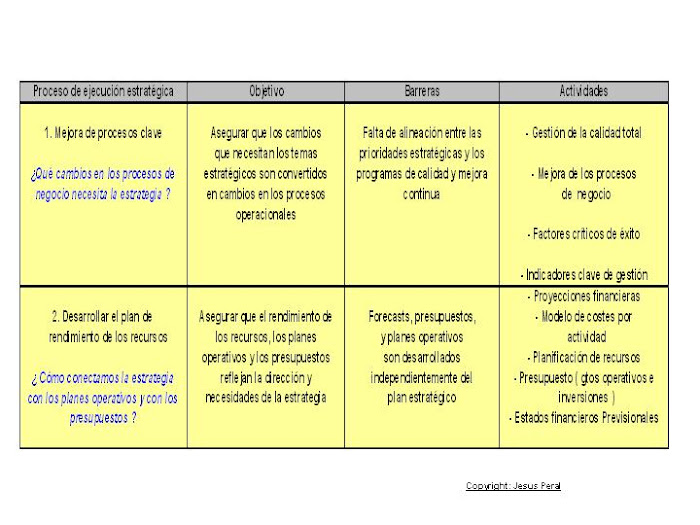
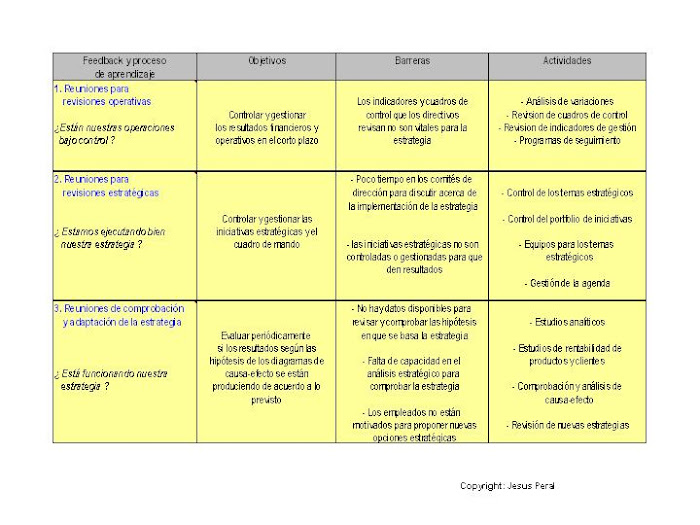
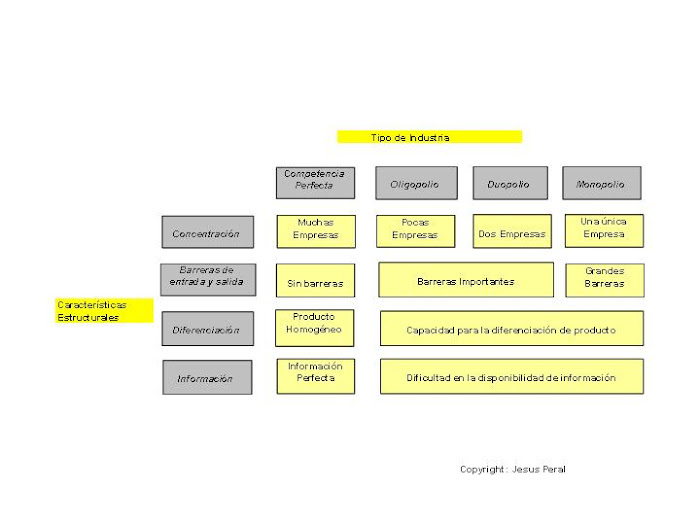
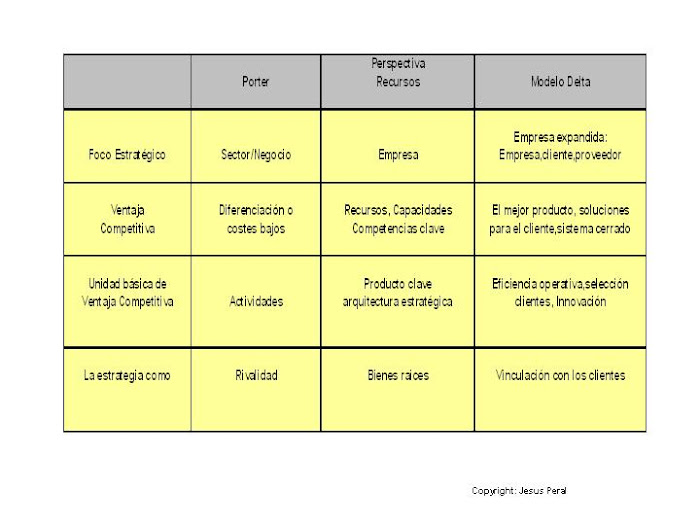
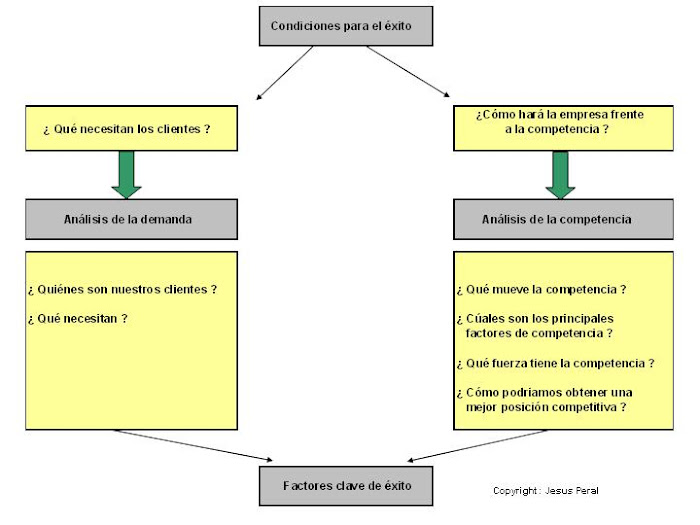
Find at the end of blog all charts related to Strategic Management topics commented in the posts


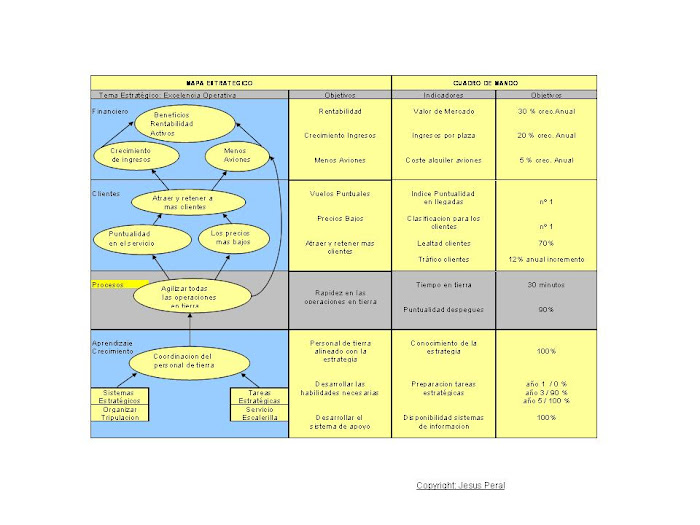
Mapa Estratégico Genérico/Strategy Map

Mapa Estratégico Genérico/Strategy Map
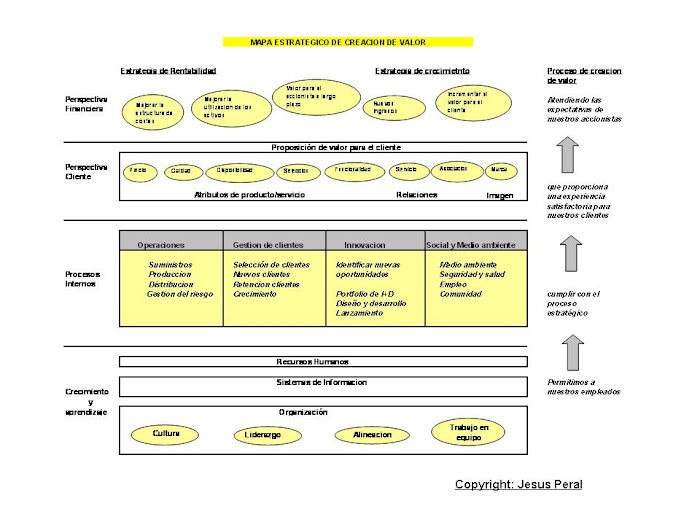
Mapa Estratégico Completo

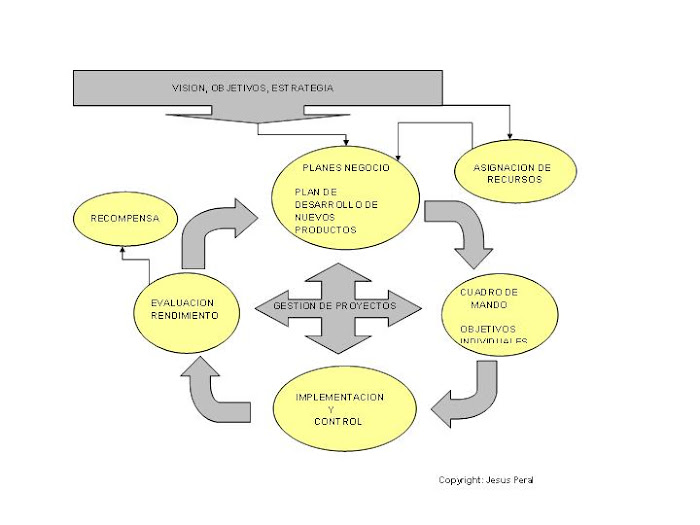
Modelo de Dirección Estratégica/Strategic Management Model

Modelo de Dirección Estratégica/Strategic Management Model
Modelo desarrollado en las entradas 1 a 100. Ver archivo del blog
Búsqueda personalizada
Mostrando entradas con la etiqueta Management (English). Mostrar todas las entradas

jueves, 11 de enero de 2018

The boss: to be or not to be (nothing is what it seems)

! You seem the boss! Are you the boss? When we analyze the features, the behaviors and the attitudes of who have the responsibility to lead people or manage teams we come to the conclusion that bosses are who feel as bosses, who assume the commitment to achieve profitable results for the company and for their collaborators.
The society of the image, in which we currently live, can distort the reality of who is in command in an organization in such a way that the appearance to be the boss can create a benefit to whom being in managerial roles does not act as true managers but as “true actors”.
Becoming accustomed to a managerial role using all kind of tricks to assure the continuation in this position and the correspondent good salary is the goal and benefit of those who would like the world not to turn, not to change of temperature and not to suffer any problem in the markets.
Luckily life goes on and change constantly offering opportunities of entrepreneurial improvements, corporate goals and collective performance. It changes so quickly that there is no time to change the mask and act in the next scene.
They are staying out of the picture many managers who proclaim themselves as the bosses, just credited by the name and position hanging from the door of their desks, not by the valuation and acceptance of their collaborators who identify them as responsible of the bad working environment, of the demotivation in the company, the high rate of absenteeism and finally of the poor economic results.
For who is profitable to pretend to be the boss? The answer is easy: for whoever appears to be. And, who harms such appearance? To the whole company and to all the actors who participate in the creation and optimization of the productivity in the organization.
If you consider you act under the appearance criteria to be the boss I would recommend you to think about the huge and serious damages that are impacting to the company in which you’re a manager or director. It is also important you think about your professional career and personal development in the last months.
If you feel as above probably you could request the help of a professional coach so you can decrease your professional fears, to stop pretending and improve your performance focused on the so called transparency.
You would need to learn how to work with emotional intelligence, managing your emotions and the emotions of your collaborators fostering productive and healthy attitudes and behaviors for the organization and for the rest of employees.
You could also use the collaboration and support of some of your collaborators, if possible people that are sincere and honest. Why not this employee you marginalized because he was very critic with you? So the first step you need to take to feel as “the true boss” is the desire to re-learn how to manage and lead giving up to  be a “fiction actor” focused on intending to serve to your collaborators optimizing the company performance and improving the working environment.
Once you are integrated in the “club of the true bosses”, who are recognized by all customers, internal and external, of the company you have to decide if you want to be a normal boss, a good boss or an excellent boss. All will depend on your degree of commitment with the organization and employees goals.
If you decided to become an excellent boss you will need to work with practical intelligence transforming the entrepreneurial and professional excellence in daily tangible actions to manage your team. Any action of improvement of the performance will increase the culture of working excellence, organizational innovation and the culture of prevention for the interpersonal problems in the company.

There are a lot of professionals that due to their attitudes and aptitudes could be consider as true bosses but even for these “special bosses” it is very beneficial to be surrounded by an excellent team continuously providing feedback of their behavior and actions.

martes, 17 de octubre de 2017

Be competent. Don´t expect a miracle


Life is a competency that never is over. To be born and fine is our first victory. From this moment the competency is the norm if you want to be competitive, that is, to have the capacity to compete.

In the organizations and in all the aspects of the human actions who aims to be a leader needs to be immersed in a permanent competency. The society determines our competency, the idea to compete steeps our daily life so it is natural we see ourselves as competitors in our jobs.

In my opinion the competency is a free exercise of preparation in the development of our skills and in the development of our own intelligence. The people who are ready to compete from their childhood take advantage of their own resources and if they lack they manage to get them to face their rivals with the same intentions: to win.

The future leader knows very well his/her goals, he/she knows the effort has to be constant and to succeed you need more than attitude and wish.

The future leader faces challenges and overcome them, for example, excess of confidence, bad habits, conformism and a short intellectual vision. Without the aim of winning the efforts turn out to be useless to become the best, we have to believe we can and we need to do all the necessary to achieve it. But we have to remember that failures will be also in the way so we need to be positive and instead of thinking about frustration we have to consider it as the impulse needed to reinforce the efforts although the time devoted exhaust us, the stress increases and you see the victory far away despite your intents to achieve it.

Competency comes with responsibility there is no room for the pessimism if you want to become a leader, preparation and development are permanent because the leader cannot betray himself and cannot discourage his/her followers. Stagnation will never go with a good leader.

The more you are promoted in the organization more difficult is your responsibility and commitment. The promotion is the personal satisfaction and the collaborators and the organization are the reason for existing.

The competency encourages with the good result to those who strive for being something else that a stagnated person in a dark destiny. The success in the competency is directly linked with tenacity and courage when these are based in the good attitude and personality. To have success expectations you have to put aside the toxic intellectual restrictions which prevent us to develop the best physical, moral and intellectual attributes.

The danger in the career to become a leader is shown when we are stagnated in our plan for the promotion. When this happens you could fall in your conformism and then you are left behind by other that worked harder and consolidated their strategy. Finally conformism becomes a real problem and a barrier difficult to overcome. But when you have mature criteria and your convictions are strong with a high sense of responsibility and dignity your tenacity to be back on track for the promotion doing all the necessary remains unchanging.

If to the contrary the person lacks the mature criteria, strong convictions, responsibility and dignity in front of stagnation then the fact of being overtaken by others becomes a “sick person” for the organization as there is no satisfaction and all will produce disagreements and permanent gossips with regard to his/her duties.

Under the above mentioned situation it is possible the straggler leader reached his/her incompetence and therefore he/she has to make a bigger effort to be reintegrated to the hierarchical flow. The level of incompetence does not mean the person is no longer working but he/she achieved the limit and has the option to change the attitude to keep efficient in front of the followers he/she leads.

On the other hand if we want to be efficient leaders and we don’t achieve a significant progress in our development we will be less reliable. Leadership requires to be constant professional and culturally, aiming high and a lot of effort and dedication. The leader has to be always ready for the changes and to learn how to calculate his/her opportunities.

The leader has to fit in a profile and knowledge which match with all he/she is obliged to know to meet his/her duties without knowing everything. To know what you need to know, professionally, is indispensable for the leader and in the absence you take the risk to make stupidities.

I would say competency is really necessary. Without it the incentive to achieve the excellence will be set aside in a cold and deserted corner. Competing is healthy without reducing the effort you need to make. Laughs, jubilation, pain and tears are part of the competency. Competency manages our destiny as persons. Lack of competency is the main reason for the incompetency.

As a conclusion the competency is not dreaming or gaming is to devote all your efforts to improve and develop our knowledge. It is in our hands but don’t expect a miracle.


martes, 25 de julio de 2017

Persuasion is another word for selling


Although it cannot be extrapolated for all the cases, in my opinion, a manager´s job is 60 percent getting it right and 40 per cent putting it across. We, as managers, spend a lot of time persuading other people to accept our ideas and suggestions.

This post is about persuading. You may feel that good ideas should sell themselves, but as you know life is not like that. Everyone resists change and something new is certain to be treated with suspicion, not always of course.

Six rules I have learned about effective persuasion in my career are commented below:

·         Define your objective and get the facts. In other words, decide what you want to achieve and why. Gather all the facts you need to support the situation. Very important, eliminate emotional arguments so that you and others can judge the proposition on the facts alone.

·         Find out what the other person wants. Never underestimate the natural resistance to change. Bear in mind that such resistance is proportional, meaning, not the total extent to the change.  Because, normally, the first questions people ask themselves are how does this affect me? what do I stand to lose? what do I stand to gain?. Ideally you should answer these questions before persuasion can start. Very simple, right? But the key to all persuasion and selling is to see your proposition from the other person´s point of view. Let´s say, have some kind of emotional intelligence. If you can do this you will be able to foresee objections and present your ideas in the way more attractive to him/her. You should try to find out how the other person looks at things and, extremely important, what he/she has to say. Therefore, don’t talk too much, ask questions to find out. Then present your case in a way that stresses the benefits to him/her or at least reduces his/her objections or fears. Like selling a product where the more important argument is the benefit not the features of the product from a consumer/customer point of view.

·         If possible, prepare a simple and attractive presentation. Again, emphasize the benefits. Anticipate objections.

·         Find some common ground in order to start off with agreement. Avoid defeating him/her in arguments. Help him/her to preserve his/her self-esteem. And, very important, always leave him a way out.

·         Show conviction because you are not going to sell anything if you don’t believe in it and communicate that belief. Remember to spell out the benefits. What you propose is of less interest to the person concerned that the effects of the proposal on him/her.

·         And finally, I would say, choose the right moment to settle the proposal and get out. Take prompt follow-up action. There is no point in going to all the trouble of getting agreement if you let things slide afterwards.

Based in all the above I concur that persuasion is really just another word for selling. Hope you agree and share your experiences.

martes, 18 de abril de 2017

I am not your boss but a friend who is always right


Should we complain and tell our boss what we think about him/her? This post is about this.


In many occasions we are unhappy with our work and with our boss. This situation leads us to consider telling what we think about him/her. But sometimes we need to know in advance what it is advisable to say before making a big mistake.

Talk with full sincerity to our boss, telling him or her all what we think is a very risky relief, above all if we don’t find the right moment, way and place.

Normally, this sincere impulse hastens due to lack of tune or for the permanent conflict with your manager. It might be your boss does not get along with you and you are aware of it.

It is also possible you were not meeting the expectations, he sees you as a threat or you always disagree with him/her.

You could use different strategies depending on the reasons. You can leave the company or you could also survive coping with the situation until you find a new job but you cannot fight this attitude of rejection as if nothing happened. Therefore the solution is to complain or be honest and tell what you really think.

It is true that if the company where you work monitored your performance based only on your achievements you should not be worried about talking honestly and openly. But honesty turns out to be, in many companies, an act of suicide.

A very important advice would be, never do this in front of a big audience. The negative feedback has to be commented in private and the positive in public. This is a rule of thumb.

It is very important to be focused on the objective errors and avoid the personal view. In addition, you should propose your own alternatives and solutions to the potential mistakes of your manager. But you have to take into account that your boss could make the mistakes in particular circumstances and give a positive view to your critics by analyzing how he/she resolved them.

In my experience if an employee has the right skills for a job but shows lack of loyalty it is likely this is more important. So if you doubt it is better not criticizing and get some lessons for the future.

Based on the above the question is what to do to get anything positive? The important thing with your complaint is you don’t have hidden agendas nor has no substance. In addition it should be concrete as you are aiming the things change.

The decision to be honest with our manager entails our arguments have to be based on facts. We have to avoid judgements and interpretations clarifying what are our actual needs. But very important as well is to know how he/she feels with us so we could use the complaint to know what he/she expects from us.

Finally, to be honest does not imply to be fully transparent and tell the first thing that comes to our mind. You need to understand the circumstances and do an objective analysis.

Ideally the perfect situation is when you are fully aligned with your boss so you have discussed openly what you expect from him and what he/she expects from you. This trust is the base for the future relationship and normally leads to a higher performance and mutual satisfaction.

But remember, regardless what I have commented above, there is a second rule of thumb, Never tell your boss what you think about him/her. But it is up to you.


viernes, 21 de octubre de 2016

How things go wrong and how to put them right


It is likely that a lot of professionals in the different areas of the finance function have experienced the stress when things go wrong. Things go wrong because people do less than they are capable of, misuse their resources or choose an inappropriate time or place in which to do it and normally the situation is misjudged and the wrong action taken.

In this post I would like, again, to share some experiences and suggestions to cope with the situations some people might face in their daily professional activities and even in their personal lives.

First of all, let me remember the well-known and so called Peter´s principle. Dr. Peter suggested that in a hierarchy, individuals tend to rise to the level of their own incompetence. In his experience system encourages this to happen because people are told that if they are doing their current job efficiently and with ease, the job has no challenge and therefore they should be promoted. It is also true, in my view, that this principle has only been accepted as common manner of speaking as it reflects a fundamental problem when assessing potential. We know or we think we know that someone is good at his present job. But does this predicate success in the next move up? Perhaps yes, perhaps no. However we cannot be sure because the skills needed by, for example, a scientist are quite different from those required by a leader of the research team. In other words, technical competence does not necessarily indicate managerial competence.

First thought, can we beat the Peter´s principle for us? The answer, in my opinion, is yes. But with difficulty, of course. Why? Because people don’t usually refuse promotion!! If they do, they become suspect. When you read this post probably you will remember your own experience, your friend or your colleagues, being in the same situation. Am I right? However it is perfectly reasonable to check on what is involved if you are promoted. You should get precise answers to questions on what you will be expected to achieve and more importantly the resources you will be given to achieve it and the problem you will face. If you think these demands are unreasonable discuss the job to see if they can be modified.

In my view, don’t take a job unless you are satisfied that you can do it or at least that you can learn how to do it within an acceptable period of time. And don’t forget to find out if your predecessor failed and if so, you can ask what went wrong so that you can avoid making the same mistakes.

Second thought, can we beat the Peter´s principle for others?  Well, if you are in a position of offering a promotion or a new job, you have to take into account the Peter´s principle and how to avoid it.  You need to match the capacities of the candidate to the demands of the job. So you need to analysis the skills required. For example, managerial, analytical, technical, communications etc. And then, measure the candidate against each of these criteria. This matching process should identify any potential weaknesses.

A lot of readers will know very well the typical sources of incompetence and it is likely they have seen some typical situations as follows:

·         Conservatism, for example, the typical “that’s the way it always worked. We have been market leaders for the last 10 years, why change? Familiar with this?

·         Rejecting information, what did you say about our losing market share? I don´t believe. The market research surveys are always inaccurate.

·         Indecisiveness, we need to think a bit more about this. We need more information. Let´s call a meeting next week to look at the pros and cons. Familiar right?

·         Obstinate persistence, don’t confuse me with the facts. That’s the way is going to be.

·         Scapegoating, it´s not us, it´s the rate of exchange. The government policies are killing us.

·         Suppression of news, don’t tell them about how well we are doing. They only ask for more money.

·         A belief in “mystical” forces, I just feel in my bones we must do this thing. From a CEO I worked with many years ago.

Hence see below my summary about why things go wrong (normally):

·         Inability to learn from mistakes

·         Pure incompetence through over promotion

·         Poor selection, inadequate training

·         Over confidence

·         Under confidence

·         Laziness

·         Lack of foresight

Every reader will have their own experiences, anecdotes and clear view about why things go wrong for them or for the companies they work but I am almost sure that some will coincide with the above mentioned. If not, let me know.


jueves, 2 de julio de 2015

Management by values


Management is about leading the organization to achieve its goals and objectives.  We can manage a system that could be administrative, technical, financial or commercial, which I could name as the formal system. This system follows rules and indicators very precise, which are also subject to other rules and quantified results. But it is also known that we also manage a non-formal system, which I could call the “human system”. This system is the base for the prior one and it is more difficult to be quantified or measured.

The human system is defined by the persons, their rationality, emotions, freedom, intellectual capital, emotional intelligence and above all their values. You can have the right skills to manage an organization but if we don’t manage properly the human system you are bound to fail.

Without the optimization and proper management of the human you cannot get good results in the technical. Neither the machines nor money or computers work on their own. Behind there is always a person.

In the management by values some elements stand out as follows:

·         It is a strategic and leadership management

·         Aim the values are alive in the organization as a result they are practiced by the persons

·         Allow the practice of values is productive. In other words, it will influence the profits that will be generated by the company

·         Have an impact in the transformation of the persons based on the change in attitude and conduct more than in the information and skills development

·         Foster change management to fill the gap between the present and the future as pointed out by the strategic vision

·         The persons, with their values, are the permanent base of the organization as they create a positive environment for the work

·         The values are the heart of the human system in the company, so if it works, the rest of aspects from administrative to technical will function correctly

The senior management of an organization could fail due to economic reasons, for an internal financial crisis, market loss, competition or for the tax regulations. But behind all these processes, controllable or uncontrollable, there are always the wise or mistake choice of the persons leading the organizational system, their knowledge, attitudes and values, which could impact for a change.

Management by values is actually self-management, self-motivation, self-leadership and self-responsibility, to act, not only by the commands, but aiming to achieve our own best and making sure also the best for the company.

The core of the management by values is to convert the organization in an integrated system of values that can be achieved not only for a declaration of principles related to the strategic planning but for a construction process, that normally takes time, derived from the senior management decision to give the values a real support in the organizational development and focused on the critical aspects of the company such as technical, finance, production, sales, service and quality etc.

As a conclusion I would say that knowledge and information are the new name of capital: a company is worth what the knowledge and values of the employees are worth. The knowledge and values embodied by the persons is the most productive resource of the organization.