Translate

Blog of Strategic,General and Financial Management (English/Spanish)


Strategycorner is now expanding its content to include posts about General Management, Financial Management, Finance Transformation, Marketing and HR Management. Posts will be published in English or Spanish.


At the end of the blog there are different charts about Strategic Management in Spanish. In the archive area you could find a lot of posts about strategy and its execution in English/Spanish.

Jesús Peral
Executive MBA IE Business School, Madrid,Spain


Master in Strategic Management
IDE-CESEM Business School, Madrid, Spain


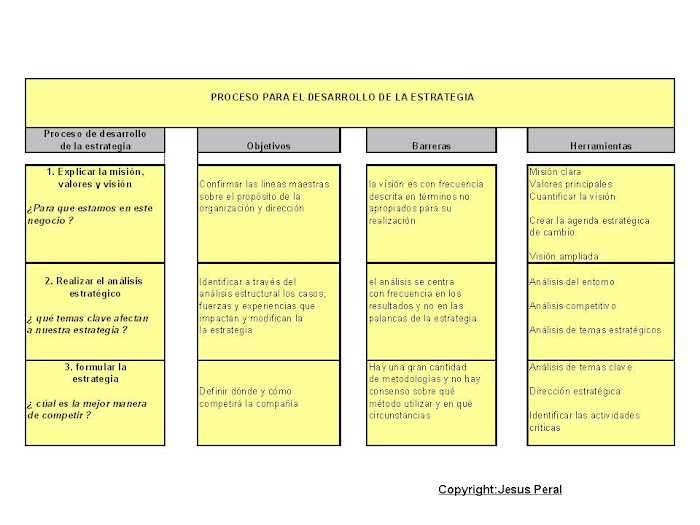
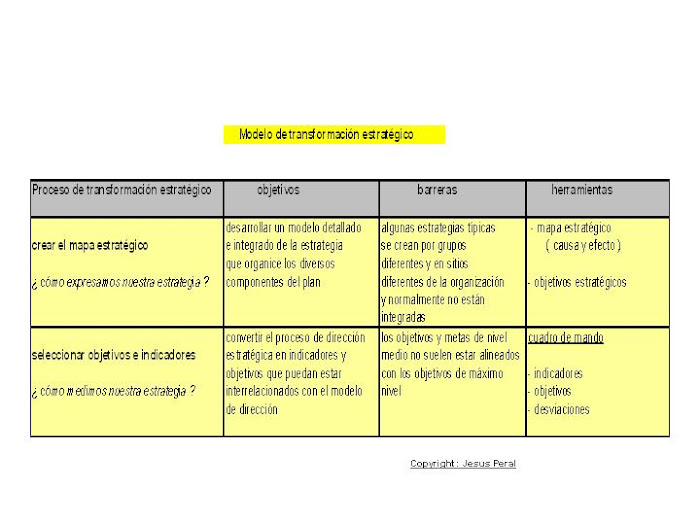
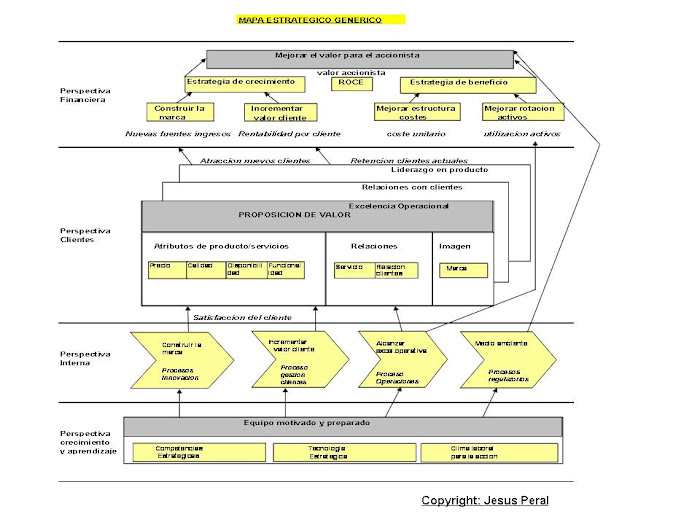
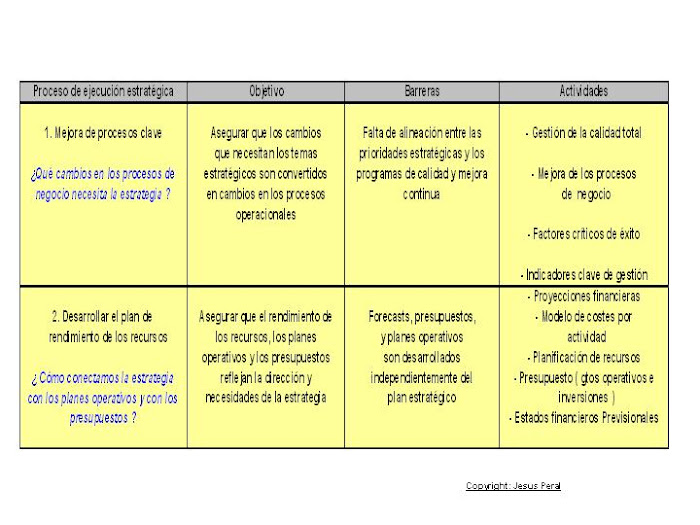
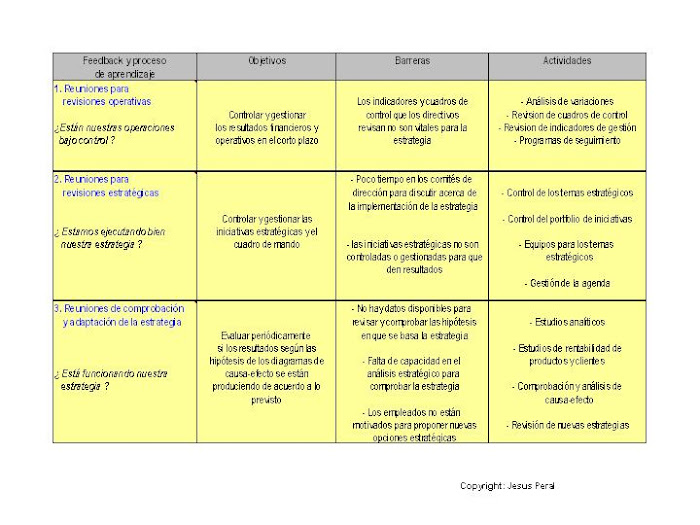
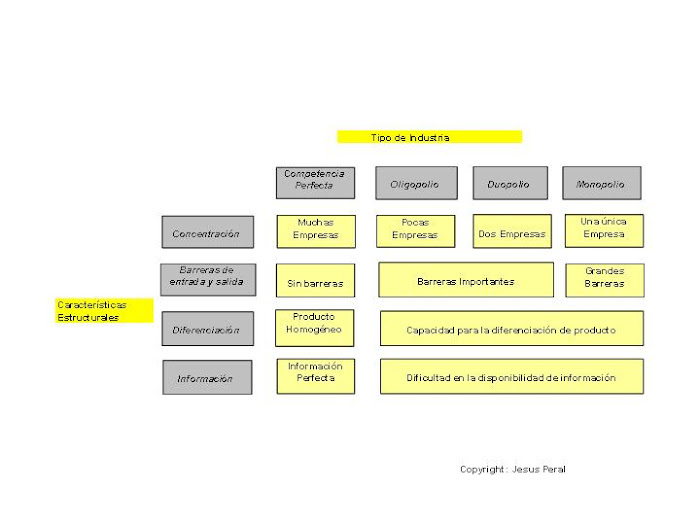
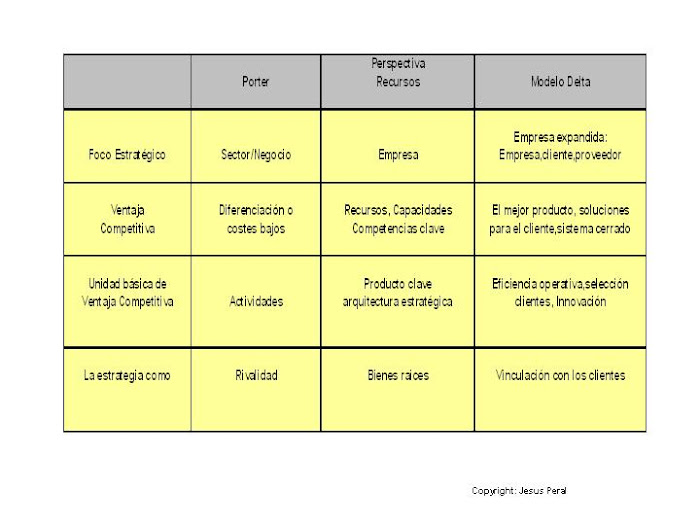
Find at the end of blog all charts related to Strategic Management topics commented in the posts


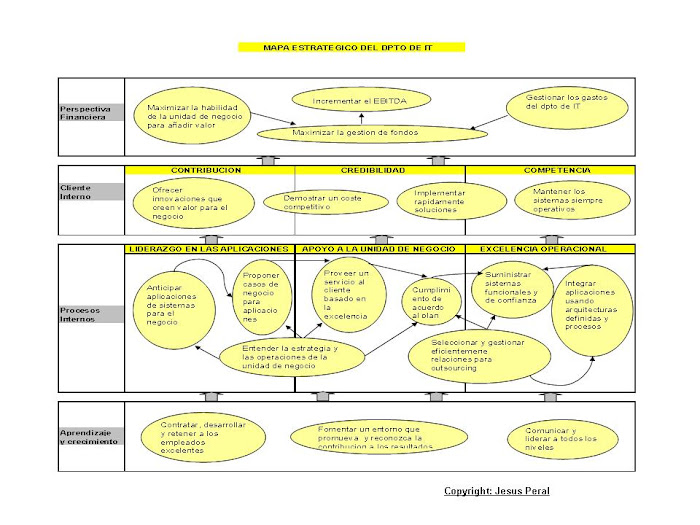
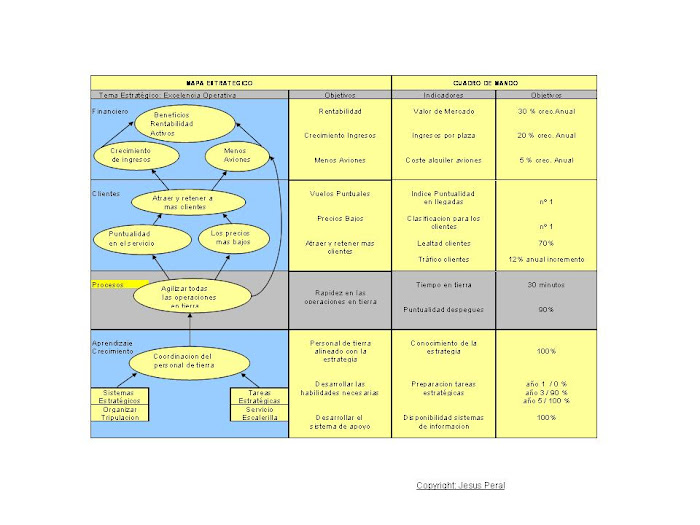
Mapa Estratégico Genérico/Strategy Map

Mapa Estratégico Genérico/Strategy Map
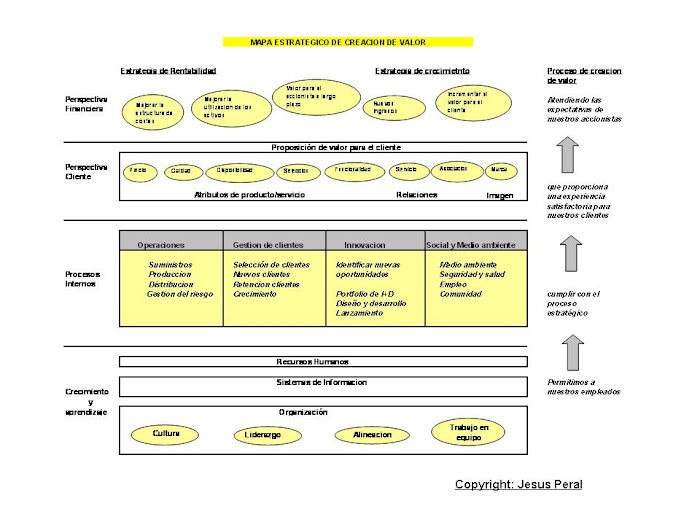
Mapa Estratégico Completo

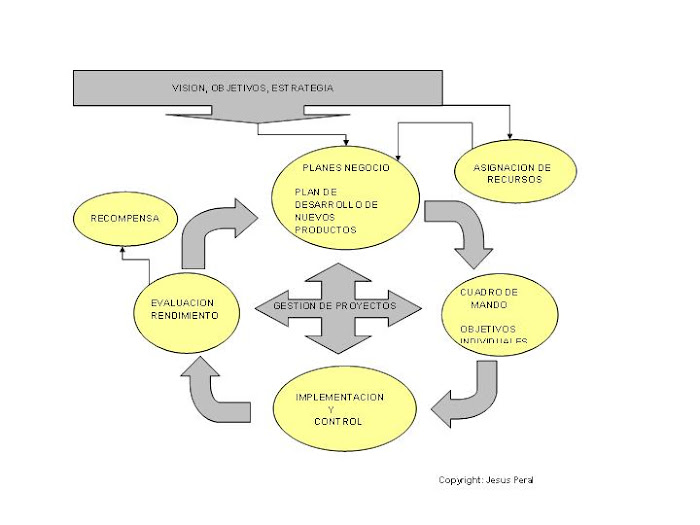
Modelo de Dirección Estratégica/Strategic Management Model

Modelo de Dirección Estratégica/Strategic Management Model
Modelo desarrollado en las entradas 1 a 100. Ver archivo del blog
Búsqueda personalizada

domingo, 7 de abril de 2019

How to manage your time, a personal view


It is likely the vast majority of the potential readers of this post know very well how to manage their time. There is a lot of articles, books etc on the subject. It is also likely these readers have the thinking “I know all about it, I have no problem in my daily professional work”.
This post does not intend to lecture but showing a personal view about how I normally manage my time at work.
Let me put this in context with a short real story. If you were told by the Managing Director of your company that he wanted you for a challenging assignment which means working closer to him giving you the opportunity to deal with strategic issues, gain more experience and even provide you some promotion prospects, would you take it? The answer would be likely, yes. If, however you were told that you would spend one day a week on this assignment and carry out your present work in the remaining four days, would you still accept it? Of course, probably you would. But how could you manage it? Definitely you would need to organize yourself better because you will need to do your existing work in four-fifths of the time you spend at the moment.
To recover this one-fifth or more, you need to think about how you use your time. You would need to organize yourself better and get other people to help or at least, which sometimes, it is really difficult, not to hinder you.
I am sure a lot of people could tell examples like the above mentioned. So how to cope with this o similar situations?
First, start with your current assignment, the tasks you carry out and the objectives you have to achieve. Try to establish an order of priority between your tasks and among your objective.
Right, I know what you think. This is difficult when you have a number of potentially conflicting areas of responsibility. And for this reason, at the end of your day you could say yourself: I have wasted my time, I have achieved next to nothing. Don’t desperate. I understand very well this feeling.
You could sort out the relative importance of your objectives and try to attach priorities to your tasks. As a second step you could give yourself sufficient free time to concentrate on major problems so you could react quickly to them.
And now a very important element. Yes, of course, delegation. You got it. You can classify the sort of issues that could arise and decided which could “safely” be delegated to others and which you should deal directly.
But at that point of time it is necessary to analyze more in detail how you spend your time. This will allow you to identify time-consuming activities and indicate where there are problems as well as possible solutions to them.
Prepare your “to do list” the day before. Summarize how effectively you spent your time. In this you will have the typical issues, reading, writing, skype calls, emails, dealing with people, attending to meetings and others depending on your area of work and expertise. The analysis will provide you the information you need to spot the weaknesses you have in managing your time. You could even prepare a time-consumer checklist to identify problems and why not, possible remedies.
I would say the main problem comes in the way you plan your work and establish your priorities. You have to fit the task you should complete into the time available to complete them and get them done in order of importance. Yes, right, you could be in your office long hours and it is likely to be the solution for you but it is not too much healthy and it is not part of the game.
I know that some people find it difficult, if not impossible, to plan their work ahead. They find they work best if they have to achieve almost impossible deadlines. Working under pressure concentrates the mind wonderfully, I heard it in a lot of situations.
But we are ordinary mortals, right? who work under a variety of conflicting pressures and we could not rely upon crisis action to get out of our work. For most of us, I assume, it is better to try to minimize the need for working under exceptional pressure by a little attention to the organization of our week or day. At the very least you should use some kind long range planning, organize your weekly activities in broad outline and plan each day in some details.
Hence what could be the practice? Sit down at the beginning of each week with your agenda, notebook or outlook planner and plan how you are going to spend your time. Assess each of your projects or tasks and work out priorities. Leave blocks of time for dealing with emails and seeing people. In my case I put everything down on paper, in a small notebook and I write what I intend to do the next day, in the morning and in the afternoon. You will probably have a better method so take advantage of it!!
At this stage why not having kind of daily organizer whatever is the format, in your computer, laptop, outlook or on paper. You can consult every morning when arriving to the office your plans and commitments. Check what is outstanding and act accordingly if you are jeopardizing a deadline.
I do not want to forget that besides organizing your work you probably need to organize as well your team. Give some housekeeping advice. Try to educate them to avoid unnecessary interruptions. Do not anger them by shutting them out when they have something urgent to discuss. But if it can wait get them to agree to meet you later at a fixed time.
As I mentioned before delegation is a critical element for your help. You will save a lot of time with your collaborators if you decide what work you could delegate to them. You will save even more time if you delegate clearly and spell out how and when you want them to report back. In line with this a very important issue, learn to say no to collaborators who want to see you when you are engaged on more important things. But also give them a time when they can see you. I would say talking generally to your team about their job can be time well spent if it helps to increase mutual understanding and respect.
What I mentioned above as time-consumer checklist could look like this:

Problem: Trying to do too much at a time. Possible remedies: Set priorities. Do one thing at a time
Problem: Getting involved in too much detail. Remedy: Delegate more
Problem: Postponing unpleasant tasks. Remedy: Avoid procrastination. Do them quickly
Problem: Constant interruptions with skype calls. Remedy: State firmly you will call back when possible
Problem: Insufficient time to think. Remedy: Reserve blocks of time for thinking
Problem: Too much time spent in conversations. Remedy: Decide in advance what you want to achieve when you meet someone.
Problem: Too much time spent in skype meetings: Remedy: Review all the meetings you hold and eliminate as many as you can.

I know that every professional has their own method according to the situation, experience, management style and working environment but remember you need to manage your time, also thinking in the important and in the urgent with the sane objective to give relief to the stress and be more efficient.
Think about it and share your thoughts!!

lunes, 28 de mayo de 2018

Are we suffering from excessive leadership?

In the vast majority of the management courses we can hear a lot of messages addressed to the executives talking about the excellence and competitiveness of the organizations in the global economy including the meaning of social responsibility, human capital, quality, strategy, innovation and knowledge management. But on top of this message there is one mentioned very often, the leadership.  In my opinion this is really a fashionable word, this post is about my reflection if sometimes we are suffering excessive leadership.

The question is the managers/executives have to catalyze the performance of the areas under their responsibility with a satisfactory working environment. We may call this as leadership but I would say that bosses and subordinates feel as such or better to say like executives and collaborators. It does not seem some feel like real leaders and the others followers but it could be considered as the leadership of subordinates, the so-called human resources displayed after achieving the desired outcome and fostering the best possible working environment.

Although the relationship is obviously hierarchical the above mentioned fashionable word is very common above all in the human resources scope. In my opinion we should start avoiding the “label” human resources and assume that you are a leader by the decision-choice of your followers instead of being a leader because you are the boss or you have attended to a seminar of leadership. To explain it a little bit more, just think about creativity where it depends on we are perceived as creative people and not because we have attended to creativity seminars. But the truth is there are a lot of talks about leadership and human resources but if we talk about resources the right word would be “managing” instead of “leading”.

This particular leadership can be exerted, of course, with different management styles, based on corporate culture, based on the personality of the individuals. Apart from the alterations of the professional values and competence shortage that can be found in the senior leaders/executives we could also focus some distress in their behavior probably due to the stress, anxiety, obsessions etc. In this context of this behavior “disorder” I would also add some level of excess of leadership. It is likely I could be wrong but sometimes I think that some leaders guided by this fashionable word or due to the excess of reading books about leadership or even by attending too much leadership courses or conferences they are overacting and assuming an excessive prominence.

Needless to remember that the leader to some extent is the superhero of the literature about management and that a lot of consultants, coaches and lectures are settled in the leadership skills as the essential quality of the senior executive.

Sometimes, I honestly think there is an excess of leadership and between all this worrying some kind of delirium. It is likely some leaders will be successful in the head. I cannot generalize but I read a lot of books on the subject during my career and I can remember striking statements. For example, the leader has to conquer the intelligence, the wish and the emotions of the followers. Another example, the leader is the one who achieves people do what they have to do. And the last example, managing people is difficult because they have sex, age and character. My conclusion on the above is that some authors think the leader is the hero and the followers are pure mediocrity. I could be wrong in my conclusion, apologize for it.

I also think the balance, moderation and common sense is the most common scenario. However, there may be some cases where some leaders, under questionable influences, show a behavioral distress with the following indications:

Permanent instructions and controls in the people management that remember the “old foreman style”.
Tendency to ignore the knowledge, initiative, ideas, opinions, merit, expectations and even the needs of the subordinates.
Tribute to the own ego and the appearances which leads to the inability to recognize errors or lack of competences and accept criticism.
Excess of self-esteem and sense of being indispensable and infallible utilizing the rest of people as mere resources.
Exaggeration about the past achievements and lack of realism to formulate new goals.
Desire to impose beliefs, values, feelings and habits in his/her collaborators beyond the desirable alignment of efforts.
Manipulating practices such as promises, motivating pep talks, lies, encouragement of dependency, “smoke screens”, etc.

But the question is why this excess of leadership? In my opinion there are different reasons. 
A lot of young executives/leaders attend to training and development programs where they claim a special talent, a promising future where they are requesting to take risks without fear of failure, being optimistic and positive. Where the need and relevance of leadership is emphasized and where they are told, in many cases, that without leadership the efforts of the teams will not deliver results. Maybe a dangerous adulation. 

What is then the fair point of leadership? The vast majority of leaders seem to know it, but in this context, I would say it is the one in which the leader forgets his/her condition of leader and, conversely, the subordinates feel themselves followers.

The final question would be, is there a treatment for the excess of leadership? The reply is probably there is but it would go through the detailed review of the mental models. But the fact is that some leadership training courses do not neutralize the “disorder” but foster it. Some cultures and management styles do not neutralize it either. Based on that the excess of leadership is frequently irreversible and the best would be to prevent it. Prevent it very carefully and with attention so that “the frog would not boil”. We need to insist that any artificial enhancement of the executive/leader could generate a dose of inhibition of valuable abilities in the subordinates/collaborators.


The q

lunes, 19 de marzo de 2018

Talent Development (every talent belongs to someone)


Indeed, this post is about talent. In the last years the acquisition and development of talent is a priority in the agenda of the vast majority of organizations and executives.

But this is not really new. In my experience managing different teams we have different ways of developing the talent, for example, why instead of looking from the top how to develop the talent we apply our intelligence to help them to discover their own? I will try to explain what I mean.

Let´s start to ask ourselves some questions as follows:

·         Which is the talent that makes them unique and it is needed by the organization?

·         In which situations and how they could develop it?

·         Why we don’t create scenarios and opportunities so they could effectively test it?

·         What if we give them feedback about how they did it and how they could improve it?

If you are worried to retain your key employees, those who will allow you to carry out your corporate strategy which took a lot of resources (time, effort and expertise) to be planned I can understand your worries.

Allow me to tell an example from my own experience. Some time ago when I was leading a finance department I proposed to my organization to look the talent development from a different perspective. We need to consider the human being aspect that was my argument. I did not get too much approval, to be honest, no approval at all. I heard things like “this is not your business you just do the changes approved by the senior management” or “we understand your point but you know, here the things are different, people don’t leave the company, they need the money and they do whatever”. The attrition rate was increasing dramatically. But not only the new employees were leaving but also the most seniors as well, including some pioneers and also the so called “right hands”. How was this possible? Was not money everything?

I insisted that we needed to ask different questions, intelligent questions. Avoiding the questions where the replies could be premeditated. The senior management and the HR Director asked me to prepare a list with my proposals. Well, see below some examples:

·         How do you feel on Monday morning?

·         How do you feel on Friday afternoon?

·         Do you think we should offer anything different to our customers?

·         What obstacles, from the leadership perspective, do we put to allow you to do your tasks?

·         Do you know how your work contributes to the business?

·         How do you think we could save money?

·         If your work is not for 10 points, what do you lack to do it?

·         What was the latest decision senior management made and you did not understand?

·         How we could communicate these decisions in a clearer way next time?

·         How could you do you work more effectively?

·         If you could change the collective behavior of the organization, what would it be?

·         How you see, how you feel working in the team of this company?

·         What make you feel proud of working in this company?

·         What did you learn last week? From whom did you learn anything?

I could add more but I don’t want to bore the reader!!!

The above questions did the people spoke out.  Speak out if you are concerned, that was the message. When you ask people honestly they are ready to share their thoughts. They talk with the expectations that something is going to change. At the end of the day we have to tell the employee which is the talent the company needs from him/her.

As you know the quality of the answers are based on the quality of the questions. The reason for the above mentioned questions was to look for clues to clear up the uncertainty in terms of what the person considers the company could do to improve his/her performance and results. In other words it is the employee who will express the intention to develop and strengthen those capabilities that would increase his/her value, image and self-confidence. Hence the question is: what is the organization doing to create opportunities where the talent of the employees can be put in practice? We don’t need to assign the role of team leader immediately but the person can be a team member where he/she can feel is useful, trustful and part of something superior and important.

Continuing with the above example after telling the employees what was the talent most needed and how they could apply it and after including them in challenging projects the situation started to change. The employees started to express their opinions and freeing the first talent: to respond creatively and sincerely to honest questions and concrete experiences. In this scenario the ability of the company to capture all these comments and transform in recognition and concrete rewards started to create a philosophy of respect for the own capabilities and the willingness to “walk an extra mile”.

The takeaway of this story is to know the organizations cannot assume the right to lead and manage the talent, the knowledge, the culture, the satisfaction or any other intangible which is flying over the company. The persons have to be seen from a global perspective so the organization can meet their motivations better than other only focused on satisfying the own needs even if they are well-intentioned.

Based on the above managing the talent should not be the “business priority” of the moment but to ask ourselves: if we already have the base group in our organization with dozens of talents waiting to be shown up, what can we do with them? It is about maximizing the current talent not to manage it. And actually is not a “war of talent” as in the war nobody wins. The searching should be in the opposite, in my view, get that all win, the employee, the manager the organization and the society. This way winning the heart of the people and establishing the mechanisms and support that contains the discipline people will remain in your organization. Do the right thing others will imitate it.

jueves, 11 de enero de 2018

The boss: to be or not to be (nothing is what it seems)

! You seem the boss! Are you the boss? When we analyze the features, the behaviors and the attitudes of who have the responsibility to lead people or manage teams we come to the conclusion that bosses are who feel as bosses, who assume the commitment to achieve profitable results for the company and for their collaborators.
The society of the image, in which we currently live, can distort the reality of who is in command in an organization in such a way that the appearance to be the boss can create a benefit to whom being in managerial roles does not act as true managers but as “true actors”.
Becoming accustomed to a managerial role using all kind of tricks to assure the continuation in this position and the correspondent good salary is the goal and benefit of those who would like the world not to turn, not to change of temperature and not to suffer any problem in the markets.
Luckily life goes on and change constantly offering opportunities of entrepreneurial improvements, corporate goals and collective performance. It changes so quickly that there is no time to change the mask and act in the next scene.
They are staying out of the picture many managers who proclaim themselves as the bosses, just credited by the name and position hanging from the door of their desks, not by the valuation and acceptance of their collaborators who identify them as responsible of the bad working environment, of the demotivation in the company, the high rate of absenteeism and finally of the poor economic results.
For who is profitable to pretend to be the boss? The answer is easy: for whoever appears to be. And, who harms such appearance? To the whole company and to all the actors who participate in the creation and optimization of the productivity in the organization.
If you consider you act under the appearance criteria to be the boss I would recommend you to think about the huge and serious damages that are impacting to the company in which you’re a manager or director. It is also important you think about your professional career and personal development in the last months.
If you feel as above probably you could request the help of a professional coach so you can decrease your professional fears, to stop pretending and improve your performance focused on the so called transparency.
You would need to learn how to work with emotional intelligence, managing your emotions and the emotions of your collaborators fostering productive and healthy attitudes and behaviors for the organization and for the rest of employees.
You could also use the collaboration and support of some of your collaborators, if possible people that are sincere and honest. Why not this employee you marginalized because he was very critic with you? So the first step you need to take to feel as “the true boss” is the desire to re-learn how to manage and lead giving up to  be a “fiction actor” focused on intending to serve to your collaborators optimizing the company performance and improving the working environment.
Once you are integrated in the “club of the true bosses”, who are recognized by all customers, internal and external, of the company you have to decide if you want to be a normal boss, a good boss or an excellent boss. All will depend on your degree of commitment with the organization and employees goals.
If you decided to become an excellent boss you will need to work with practical intelligence transforming the entrepreneurial and professional excellence in daily tangible actions to manage your team. Any action of improvement of the performance will increase the culture of working excellence, organizational innovation and the culture of prevention for the interpersonal problems in the company.

There are a lot of professionals that due to their attitudes and aptitudes could be consider as true bosses but even for these “special bosses” it is very beneficial to be surrounded by an excellent team continuously providing feedback of their behavior and actions.

martes, 17 de octubre de 2017

Be competent. Don´t expect a miracle


Life is a competency that never is over. To be born and fine is our first victory. From this moment the competency is the norm if you want to be competitive, that is, to have the capacity to compete.

In the organizations and in all the aspects of the human actions who aims to be a leader needs to be immersed in a permanent competency. The society determines our competency, the idea to compete steeps our daily life so it is natural we see ourselves as competitors in our jobs.

In my opinion the competency is a free exercise of preparation in the development of our skills and in the development of our own intelligence. The people who are ready to compete from their childhood take advantage of their own resources and if they lack they manage to get them to face their rivals with the same intentions: to win.

The future leader knows very well his/her goals, he/she knows the effort has to be constant and to succeed you need more than attitude and wish.

The future leader faces challenges and overcome them, for example, excess of confidence, bad habits, conformism and a short intellectual vision. Without the aim of winning the efforts turn out to be useless to become the best, we have to believe we can and we need to do all the necessary to achieve it. But we have to remember that failures will be also in the way so we need to be positive and instead of thinking about frustration we have to consider it as the impulse needed to reinforce the efforts although the time devoted exhaust us, the stress increases and you see the victory far away despite your intents to achieve it.

Competency comes with responsibility there is no room for the pessimism if you want to become a leader, preparation and development are permanent because the leader cannot betray himself and cannot discourage his/her followers. Stagnation will never go with a good leader.

The more you are promoted in the organization more difficult is your responsibility and commitment. The promotion is the personal satisfaction and the collaborators and the organization are the reason for existing.

The competency encourages with the good result to those who strive for being something else that a stagnated person in a dark destiny. The success in the competency is directly linked with tenacity and courage when these are based in the good attitude and personality. To have success expectations you have to put aside the toxic intellectual restrictions which prevent us to develop the best physical, moral and intellectual attributes.

The danger in the career to become a leader is shown when we are stagnated in our plan for the promotion. When this happens you could fall in your conformism and then you are left behind by other that worked harder and consolidated their strategy. Finally conformism becomes a real problem and a barrier difficult to overcome. But when you have mature criteria and your convictions are strong with a high sense of responsibility and dignity your tenacity to be back on track for the promotion doing all the necessary remains unchanging.

If to the contrary the person lacks the mature criteria, strong convictions, responsibility and dignity in front of stagnation then the fact of being overtaken by others becomes a “sick person” for the organization as there is no satisfaction and all will produce disagreements and permanent gossips with regard to his/her duties.

Under the above mentioned situation it is possible the straggler leader reached his/her incompetence and therefore he/she has to make a bigger effort to be reintegrated to the hierarchical flow. The level of incompetence does not mean the person is no longer working but he/she achieved the limit and has the option to change the attitude to keep efficient in front of the followers he/she leads.

On the other hand if we want to be efficient leaders and we don’t achieve a significant progress in our development we will be less reliable. Leadership requires to be constant professional and culturally, aiming high and a lot of effort and dedication. The leader has to be always ready for the changes and to learn how to calculate his/her opportunities.

The leader has to fit in a profile and knowledge which match with all he/she is obliged to know to meet his/her duties without knowing everything. To know what you need to know, professionally, is indispensable for the leader and in the absence you take the risk to make stupidities.

I would say competency is really necessary. Without it the incentive to achieve the excellence will be set aside in a cold and deserted corner. Competing is healthy without reducing the effort you need to make. Laughs, jubilation, pain and tears are part of the competency. Competency manages our destiny as persons. Lack of competency is the main reason for the incompetency.

As a conclusion the competency is not dreaming or gaming is to devote all your efforts to improve and develop our knowledge. It is in our hands but don’t expect a miracle.


martes, 3 de octubre de 2017

Do you want to influence? Be reliable


Leadership is influence. This could be an accurate definition about leadership. In my opinion, without influence there is no leadership. And influence is based in the trust inspired by the leader to his/her followers. I would say trust is the fuel of leadership as petrol is the fuel of a car. Without petrol the car cannot move, in the same way without trust you cannot lead. Without the trust of the followers there is no influence and without influence there is no leadership. I think this is an infallible equation about leadership.

The leader needs to be reliable to influence his/her followers. His/her effectiveness as a leader depends on this. The reliability of the leader is indispensable to influence in the organizational environment. If a leader is not reliable, the employees will not follow his/her vision and will not participate with enthusiasm to achieve the common goals and finally will not be committed with the organization.

Trust is the pillar for leadership. Leadership is based on the management of relationships and the relationships are based on the trust. Therefore without trust there is no connection between the leader and the followers.

In my experience the capacity of the leader to influence is due to the degree of acceptance in the organization. That is, to influence you need the followers believe in you, in your ethics, integrity, strength, competency.

However the reliability of the followers in the leader does not appear by chance. The leader needs to work hard on it. The actions of the leader will inspire trust in his/her followers.

The leader needs to establish through his/her behaviors, example and congruence, his/her credibility, the influence. You cannot achieve this with an isolated action but with a long way of integrity, ethic, personal congruence and competency. This process could last all the life and is the base for a durable influence that could go beyond the leader´s existence. Hence, we talk about the leader´s legacy.

As I said before without reliability there is no trust, and without the trust of the followers there is no leadership. But before the reliability of the leader, it comes first his/her personal credibility or congruence which makes him/her predictable in front of the followers.

I think reliable leaders are predictable. I would say one of the critical elements of the reliability of the leader is his/her predictability, in other words, others can predict his/her behavior.

When the followers can perceive in the leader stability and determination the trust in the leader emerges.

The leaders that want to be reliable in front of the followers need to set a clear and firm point of view and maintain his/her position without ambiguity. You cannot get the trust of other people by means of appeal you need to do it by means of words and facts. You need to be consistent and coherent with your behavior, with your values and beliefs showing integrity, that´s the only way to gain credibility in front of your teams. If the leader is constantly changing the vision, the instructions or rules he/she will lose reliability and therefore will not be trustable in front of the followers.

In my opinion the best indicator of reliability is the integrity. It is impossible to be reliable as a leader if you are not honest in your work and life. Integrity builds inevitably trust in the other persons. The integrity touches a fundamental aspect of the leader, his/her personality. The personality of the leader is the most decisive factor for the development and growth of the leadership. It is also the area used by the leaders to build influence in the followers. In my view, every reader will have his/her own opinion it is not the talent, the charisma, the intelligence, nor the knowledge the factors defining the leader but his/her personality.

Nowadays where the transparency of some governments and private companies is questioned overwhelmed by the corruption scandals, influence peddling and abuse of power the integrity is the cornerstone for those leaders who aspire to influence in the people. It is true that integrity alone is not enough for achieving the goals and resolving the problems but without it the rest falls down. Therefore integrity is an asset for the leaders.

When we act with integrity people perceive us like reliable persons and therefore we become predictable for them. People know what to expect from us so we reduce the level of ambiguity and uncertainty.

Based on the above could we build, let´s say, an equation for leadership? Let´s try. This equation would start with the coherence what leads to be predictable that in turn creates reliability which at the end inspires reliability in the followers becoming the real source of influence.

On the other hand the people trust in the leader who tells the truth with the focus in their values and beliefs. Therefore, in my view, a fundamental element for the leader to build his/her reliability is the coherence with his/her personal values. Everybody knows that the values define the things in which we believe. The values are essential part of any leader for the effective exercise of leadership. They shape the ethical sense of the person so the framework for the meaning of his/her experiences.

To the extent that the leaders manage to transform their personal values in deliberate actions they reinforce the leadership as they gain coherence. In this way their values act as platforms to renew their goals, take intelligent decisions, face challenges etc.

As a summary I would stress there is no influence as a leader without the reliability the followers confer to him. Without this reliability the leader does not have a base to influence in his/her followers. It is the reliability of the leader what builds the trust. As I said at the beginning of this post the trust is the fuel of leadership.


viernes, 8 de septiembre de 2017

Perhaps it is not so difficult to manage people


During my career I have heard many times that it is complicated to lead and manage people. However when an employee reaches certain level of experience and knowledge, let´s say, when reaching the professional seniority, you could set goals to this employee, give some empowerment, facilitating the role of the manager. In these circumstances manage people could not be so complicated unless in a particular organization the obedience is more valued than the intelligence.

The typical conflict between manager and subordinates or collaborators, can appear for different reasons. I could include here the incompetence of both sides, the typical organizational ineptitude and the fact, sometimes very common, the employee is obliged to give up the common sense, his/her consolidated knowledge and his/her professional values. In the environment where his/her obedience is more valued that his/her intelligence you should also value his/her loyalty and the mutual understanding. Of course, not all the employees escape from the effort and need to have a foreman as a manager.

During my extensive experience managing people I have found collaborators within the famous theory X and Y from McGregor. Indeed, it is easier to manage people under the Y, skilled, engaged and committed with the results, than under the X, collaborators that try to escape from the effort. Basically because with the first group you normally have low intensity relationships or frequency once you have set and agree the goals with them. On the other hand, when it comes to the second group you could find collaborators that would do nothing if you don’t tell them to do it. But all of this is a theory so you could share your own experience.

At the same time that knowledge and innovation is consolidating, as well as human capital and continuous learning, we could think the ideal situation to manage people is to set and agree the goals, allow some kind of self-leadership behind these goals and provide the right resources to the teams. In this regard, the manager, more than behaving as a modern foreman, should be focused on managing his/her department or organization.

Very frequently I have heard about management is just about motivating people but sometimes I had the feeling that many employees when perceiving they are encouraged and stimulated could be frustrated and demotivated. Perhaps the “art” consists in motivating without being visible but this is normally very difficult. I would say that with attractive goals the employee with the “Y” profile would head to them more for a mere magnetism than for following the motivating leaders.

Long time ago the employees were considered the arms and legs of the organization. However, nowadays, in my view the employees are really the heart of the organization and this organization will continue beating deeply as long as the leaders work with the passion of the first day and the intensity of the last one.

In many sectors the employees with more expertise have to exceed their managers in technical knowledge and also keep updated in their discipline. And even know what nobody knows!! Many times the decisions of the senior management have to take into account the technical knowledge, the capacity of analysis and the good judgement coming from the more skilled employees, that is, not only human resources, but also intellectual capital.
So what about people management? I think it would be enough in many cases to define correctly the individual goals and trust in the employees with “Y” profile. I would say we would need to simplify using self-management and empowerment, the need to achieve reasonable results. However the management style of every organization responds typically to the “mental models” of the CEO who can bet for the true value of the employees or can be inclined to hold the bosses responsible for the good decisions and blame the subordinates for the failures, in other words, to reduce the importance of the workers.

In summary, I have to say I have heard in many occasions that people management is kind of an art, manage middling subordinates is easier than manage talented people, manage people requires a good head and heart and manage people is complicated, because they have age, genre and character. Generally speaking it is known the difficulty of managing people and this is also more difficult when it comes to talented employees. But in my view this difficulty is never considered based on the cultural environment, with the management models of the organization, with the management style that sometimes doesn’t allow the intellectual capital to be developed adequately. Based on that I would foster cultural environments to develop talent and reward the efforts, maybe all would be easier.


miércoles, 16 de agosto de 2017

The importance of knowledge management in the Finance transformation


Over the last 6 years I have been involved in Finance transformation projects related to BPO activities, Shared Service Centre implementation and Migrations & Transitions to stabilize existing Centers of Excellence. The companies where I worked, in different countries, are well known and successful which took the decision to follow this strategic transformation to standardize processes, gain efficiency, reducing operating costs and above all to enhance the value of the finance function as partner of the decision making and future pillar to achieve a sustainable competitive advantage. The companies act in highly competitive markets with a fierce competition and with clear pressure from shareholders and stakeholders.

This movement in my career was guided for my approach to get a continuous learning and to understand the two sides of the story. I have an extensive experience as Finance Director so my view from the customer perspective was clear in terms of requirements and improvements. Hence I was looking for gaining experience from the supplier perspective to achieve what I call “the whole egg”.

During this period the word Finance Transformation was very common in all meetings regardless the level of the attendees. Every one mentioned this for different activities. The first question I tried to answer was: What do we gain with a Finance Transformation project?

Well, from all my experience in the above mentioned companies and projects, the summary would be as follows:

·         Need of less investment of time and resources in all the operational and control processes

·         Improve of the quality of the information for the decision making process

·         Increase in the specialization of the finance resources

·         Finance becomes a business partner

·         Finance organization can be focused in value added and strategic activities

·         To achieve synergies it is necessary to be focused on the delivery of standardized  services and the consolidation while you balance the local and business units needs

The main focus of all the transformation projects is similar in my opinion, apart from the core achievements, the companies would need to be focused in being a learning organization and leverage the knowledge, so I would say to excel in the knowledge management.

A learning organization is skilled in creating, acquiring and transferring knowledge. In other words, a learning organization improves a company´s ability to react to, to adapt to, and capitalize on changes in its internal and external situation. All the projects commented above have a common core element, the knowledge transfer.

In my opinion the learning organization need practices and mechanisms which will:

·         Capture what is happening in the business environment

·         Enable those who receive the information to relate it to what others are observing and to analyze it in the light of the company´s previous knowledge

·         Document both information and analysis and make them available to others at the company and also for subsequent use

·         Measure the organization´s rate and level of learning in order to ensure that gains have in fact being made

Probably all the above elements could be considered as part of the knowledge management. I would say knowledge is information combined with experience, interpretation and reflection. Hence knowledge management could be the systematic process for the purpose of collecting and controlling the resources of the employees and abilities just as a company controls its inventories, raw materials and other physical resources.

At this point of the post, I would like to mention other critical element, the information. There are several reasons why we are nowadays talking increasingly about the strategic importance of the information. The technology has given us new possibilities while also forcing us to seek competitive advantage in ways less easily imitated that close physical proximity to customers. What companies can do is to create structures around people, places for interaction in combination with procedures and stored data.

Based on my above mentioned experience a company searching a conscious policy of knowledge management has to ask itself a very simple question: What do we want the knowledge for? The assets of a company run for profit are worth the present value of the effects on expected streams of future payments. When a company makes an investment in a data warehouse it does so in anticipation of improving its profits, meaning, of lowering costs and/or increasing revenues. How do we describe the link between expenditure and benefit? In other words, before we spend our money we should try to agree on why we are doing it.

My observation is the focus is on the structure surrounding people and data. But what tools, what infrastructure is provided for people? What incentives are offered to encourage them to contribute their knowledge? Are successful stories published which show the value of sharing knowledge? The formula should include data, people and structure. The companies should work on its strategy to create something unique and difficult to imitate. As you can imagine this is not supposed to be easy but this is part of the top management role.

I would like to finalize this post commenting on the other critical element, the systems. In my opinion the underlying cause of change is the shift of focus towards core competencies at the heart of the processes and away from the process flows themselves. Based on this the change imposes new requirements on company information systems. I have seen this directly. So, what should be the requirements of these systems? My observation is the systems should provide new languages, categories to identify and measure the company´s competencies and skills. In addition the new applications should emphasize the problem solving and presentation rather than results and transactions. With this regard I have seen different reengineering projects but this traditional view is usually taken to mean gathering traditional company information in newer, cheaper or simpler ways so that it can be made available more rapidly to more people. But if the companies are to be focused on core competencies these are normally based on learning and experience therefore the traditional data warehouse solutions have little to offer in my view. The challenge here is to build up information systems which see that company employees share both their information and their experience and which help them to do so.

As a summary I would like to say as I have seen in my journey so far the systems support the processes, transactional processes, integrated logistics where applicable and work flows. However the challenge, in my opinion, is to achieve systems which support competencies, for example, conversation and learning at work, networks for connecting people, structures to interchange of experience and communication building.

The journey is still in place so hope to see the new developments and how companies are adapting the finance transformation projects to the new demands of the environment, the challenges in the markets where the companies operate and the underlying need for the finance function to be seen as a value driver and the necessary business partner.

martes, 25 de julio de 2017

Persuasion is another word for selling


Although it cannot be extrapolated for all the cases, in my opinion, a manager´s job is 60 percent getting it right and 40 per cent putting it across. We, as managers, spend a lot of time persuading other people to accept our ideas and suggestions.

This post is about persuading. You may feel that good ideas should sell themselves, but as you know life is not like that. Everyone resists change and something new is certain to be treated with suspicion, not always of course.

Six rules I have learned about effective persuasion in my career are commented below:

·         Define your objective and get the facts. In other words, decide what you want to achieve and why. Gather all the facts you need to support the situation. Very important, eliminate emotional arguments so that you and others can judge the proposition on the facts alone.

·         Find out what the other person wants. Never underestimate the natural resistance to change. Bear in mind that such resistance is proportional, meaning, not the total extent to the change.  Because, normally, the first questions people ask themselves are how does this affect me? what do I stand to lose? what do I stand to gain?. Ideally you should answer these questions before persuasion can start. Very simple, right? But the key to all persuasion and selling is to see your proposition from the other person´s point of view. Let´s say, have some kind of emotional intelligence. If you can do this you will be able to foresee objections and present your ideas in the way more attractive to him/her. You should try to find out how the other person looks at things and, extremely important, what he/she has to say. Therefore, don’t talk too much, ask questions to find out. Then present your case in a way that stresses the benefits to him/her or at least reduces his/her objections or fears. Like selling a product where the more important argument is the benefit not the features of the product from a consumer/customer point of view.

·         If possible, prepare a simple and attractive presentation. Again, emphasize the benefits. Anticipate objections.

·         Find some common ground in order to start off with agreement. Avoid defeating him/her in arguments. Help him/her to preserve his/her self-esteem. And, very important, always leave him a way out.

·         Show conviction because you are not going to sell anything if you don’t believe in it and communicate that belief. Remember to spell out the benefits. What you propose is of less interest to the person concerned that the effects of the proposal on him/her.

·         And finally, I would say, choose the right moment to settle the proposal and get out. Take prompt follow-up action. There is no point in going to all the trouble of getting agreement if you let things slide afterwards.

Based in all the above I concur that persuasion is really just another word for selling. Hope you agree and share your experiences.

viernes, 7 de julio de 2017

Developing people: my modest experience


If you have led teams in your career it is likely you have thought your “inventory goes up and down in the lift”. Why? Because your main resource, let´s say, your working capital was your people. Money matters but he human beings who work for you and the organization matter even more.

In this post I would like to share my modest experience in developing people. I have always learnt from my prior senior managers, from a pragmatic view, to regard people as an investment. Their value increases as they become more effective in their roles and capable of taking on greater responsibility. In accounting terms, as I have worked as Finance Director and other finance managerial roles for many years, people may be treated like any other asset on the balance sheet, taking into account acquisitions costs and their increasing value as they gain experience. Until here I am not discovering America again!!!

But, which is the manager´s contribution to effective training? In my experience I could mention several ways you can contribute to the effective training of your team, as follows:

·         Determine the standards of performance required for each of the roles you control

·         Analyze the competences relevant to the achievement of these standards.

·         Agree with the individuals concerned what these standards and competences are

·         Review with these individuals their performance so that agreement can be reached on any gaps to be filled between what they can do and what they should be able to do.

·         Treat every time you give someone an instruction as a training opportunity

·         Allow for the learning curve. Don´t expect too much, but do require trainees to improve at a pace which matches their natural aptitudes.

·         Train and develop by example. Really important. Give people the opportunity to learn from the way you do things.

·         Remember that the core responsibility for training and developing your team rests with you.

·         Plan the training of your team in accordance with a regular review of their training needs

People learn mainly through experience. So it is worth spending a little of your time planning the experience of anyone for potential for development.

Planning someone´s experience, means for me, giving him/her extra tasks to do which provide a challenge or extend him/her into a new role. It could be a project which he/she has to complete or he/she could be included in a project team looking at a new development or problem which cuts across organizational boundaries. Projects which enlarge experience in unfamiliar areas are particular useful in my view. Planned experience will work better if it is accompanied by coaching so that those undergoing it can receive the maximum benefit from your expert advice.

The final piece is coaching. The best way to learn how to manage is to manage under the guidance of a good manager. Coaching is an informal but deliberate way of providing this guidance. It should be linked to performance appraisal.

But coaching is a more continuous process. Every time you delegate a task to someone and discuss the outcome you are presented with a coaching opportunity. When you delegate you can provide guidance on how the job should be done. When you discuss progress with your collaborator or when he/she reports back to you, you can ask questions on how well he/she has thought through what he/she is doing, suggest alternative ways of looking at a problem (but don´t provide the solution, je je) and provide constructive criticism if things are not going well.

So, based on all the above, remember, you can help to develop people by discussing higher-level problems with them, involving them in your decisions and increasing their understanding of how to tackle a job senior to the areas for which they are responsible. This is part of my experience so far.