Translate

Blog of Strategic,General and Financial Management (English/Spanish)


Strategycorner is now expanding its content to include posts about General Management, Financial Management, Finance Transformation, Marketing and HR Management. Posts will be published in English or Spanish.


At the end of the blog there are different charts about Strategic Management in Spanish. In the archive area you could find a lot of posts about strategy and its execution in English/Spanish.

Jesús Peral
Executive MBA IE Business School, Madrid,Spain


Master in Strategic Management
IDE-CESEM Business School, Madrid, Spain


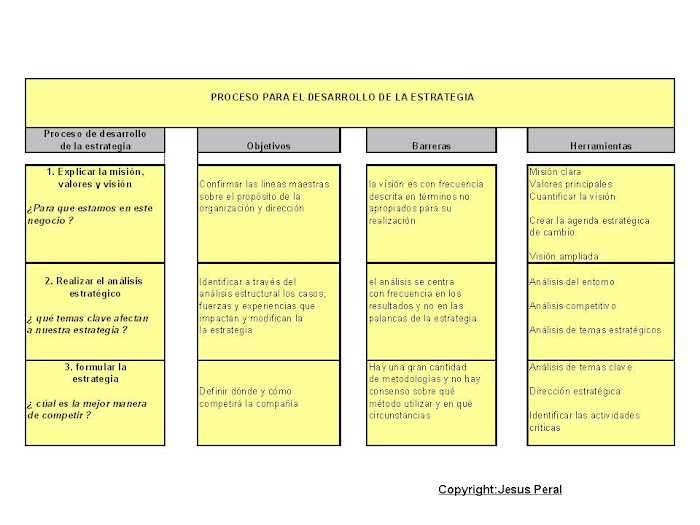
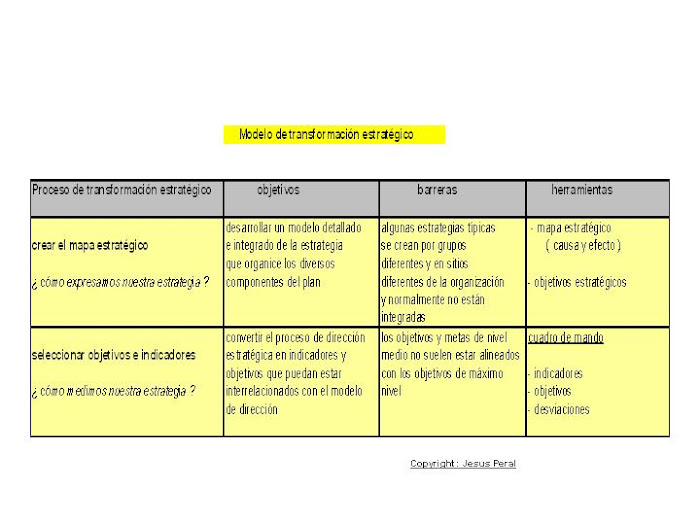
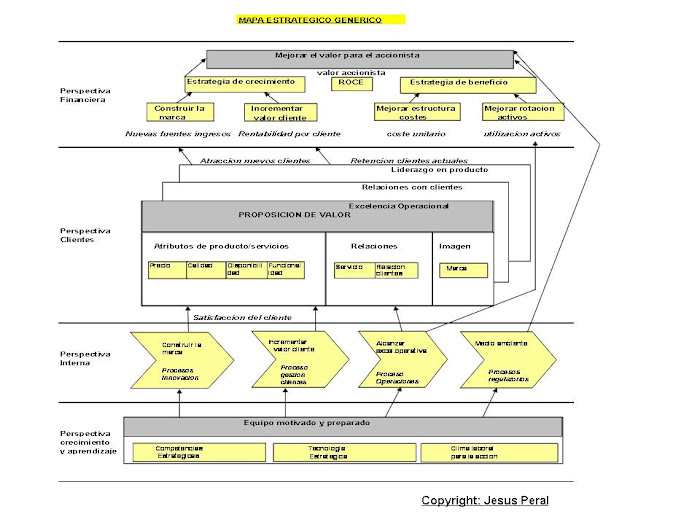
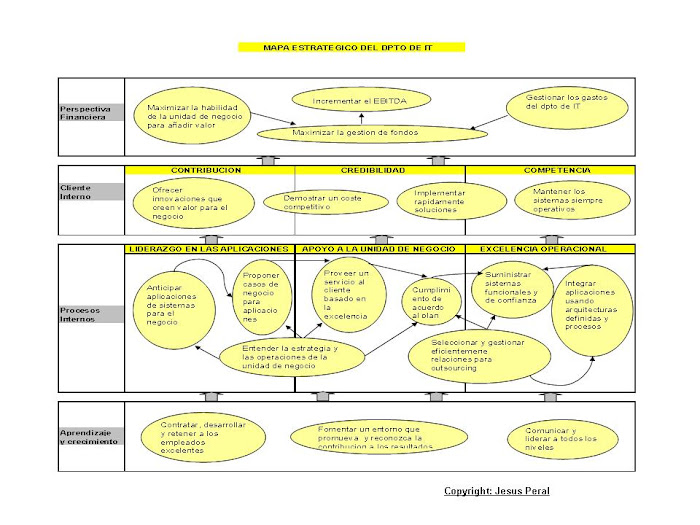
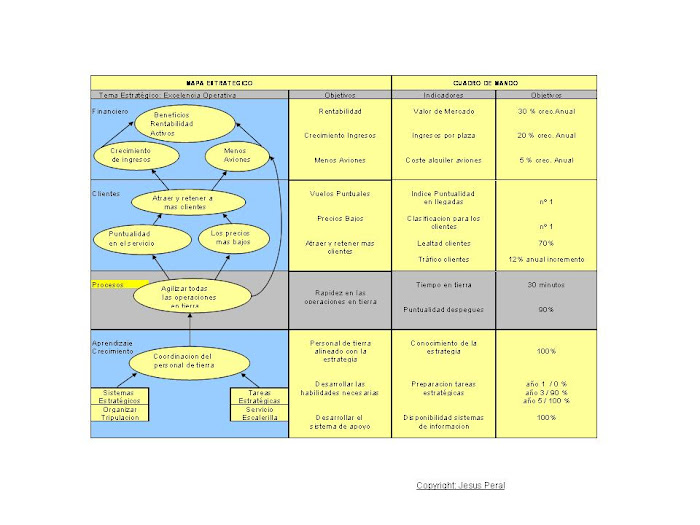
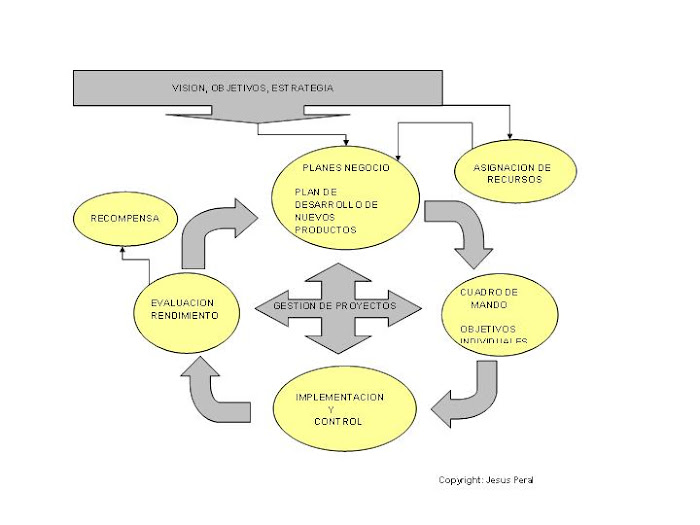
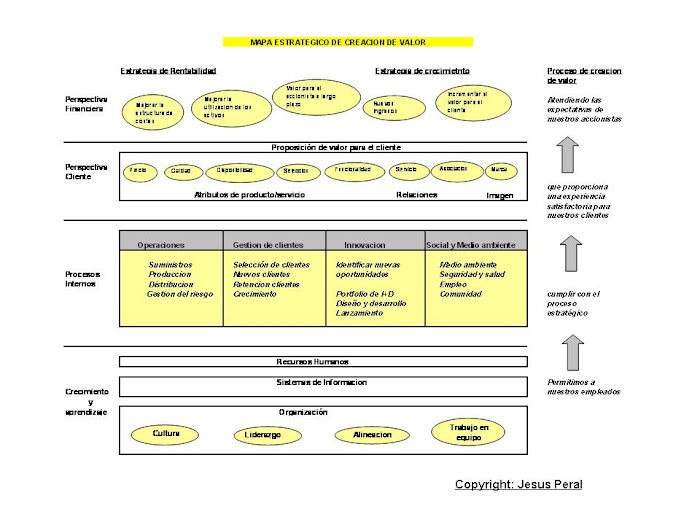
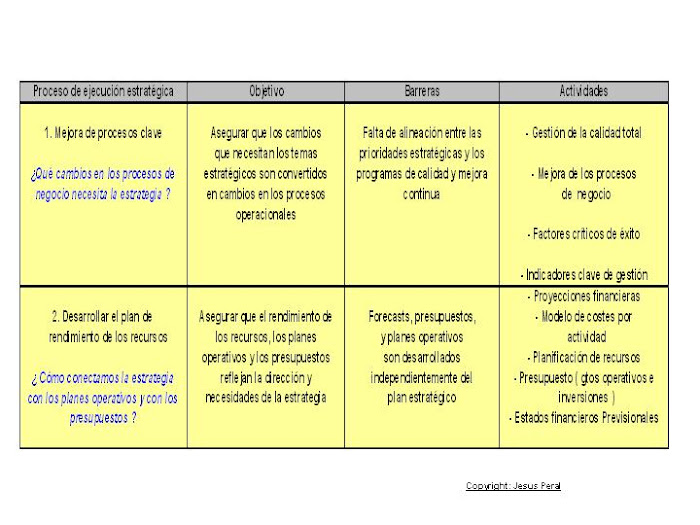
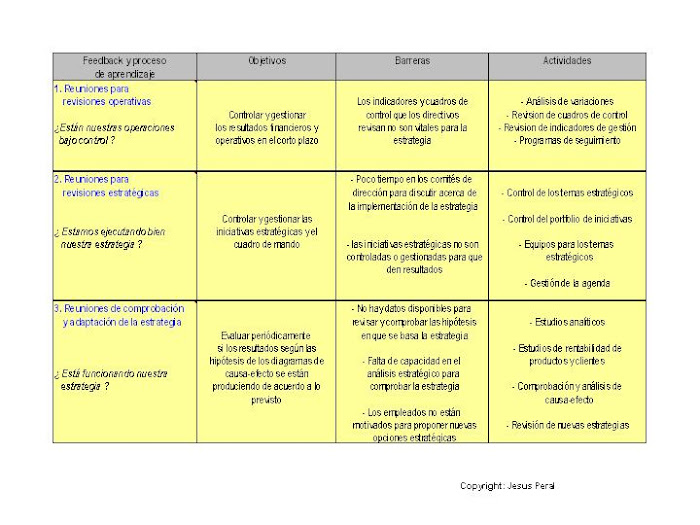
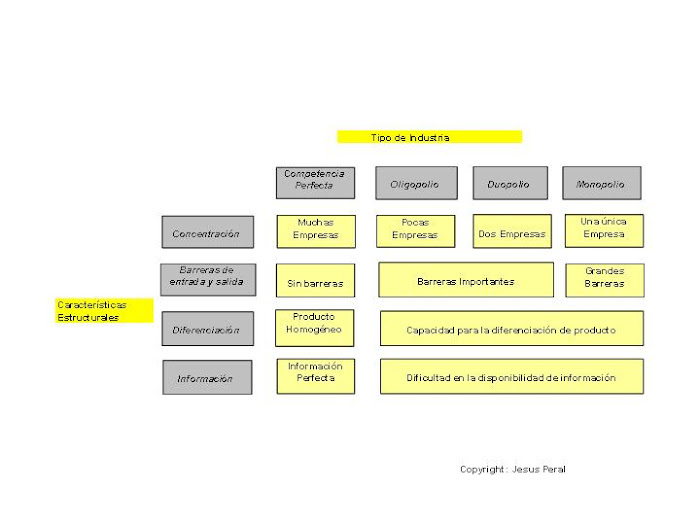
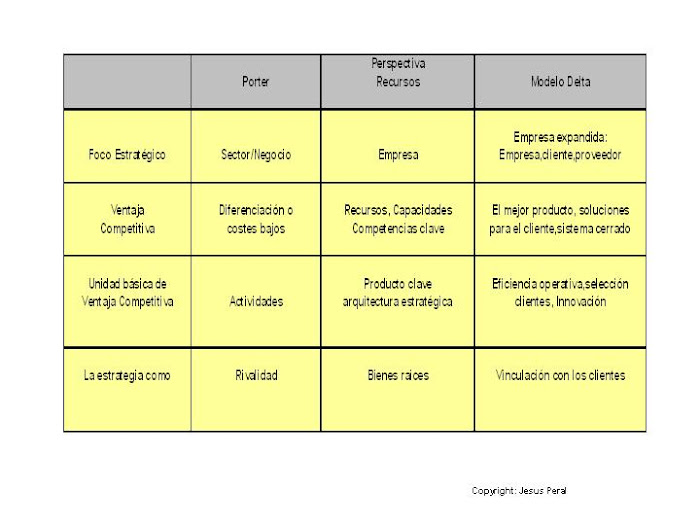
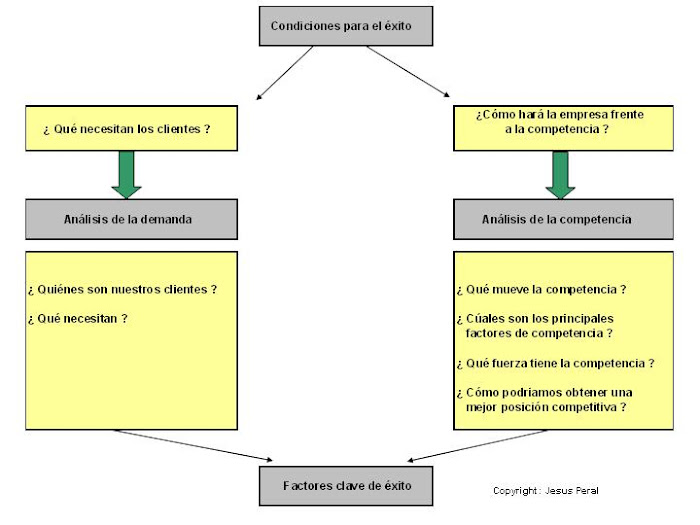
Find at the end of blog all charts related to Strategic Management topics commented in the posts


Mapa Estratégico Genérico/Strategy Map

Mapa Estratégico Genérico/Strategy Map
Mapa Estratégico Completo

Modelo de Dirección Estratégica/Strategic Management Model

Modelo de Dirección Estratégica/Strategic Management Model
Modelo desarrollado en las entradas 1 a 100. Ver archivo del blog
Búsqueda personalizada

lunes, 4 de julio de 2016

Managing your boss


I write this post with a profound respect for all the bosses I have had in my career so far. Some of them were very good, good, bad and even very bad. But from all of them I have learnt a lot of things that have contributed to my management style.

This post is about sharing my experience to manage your boss. If you want to achieve results, innovate and get on you have to learn how to manage your boss. If you really believe something needs to be done and you cannot do it without the consent of your boss you have to work out how you are going to manage him.

So what do you need to know?  For example:

·         Get agreement from him on what you want to do

·         Deal with him over problems

·         Impress him so that he is more likely to accept your proposals and to place his trust in you.

The above is not exact science but will help you in the vast majority of situations.

Getting agreement from your boss is in many ways like getting agreement from anyone else. You need to be good at case presentation and at, let´s say, persuasion. To put some examples of the things you would need to do (everyone could have a personal list based on his/her own experience, of course):

·         Find out what he expects

·         Establish how he likes things presented to him. For example, does he like long written reports? Or does he prefer a succinct proposal on one side of one sheet of paper?

·         Get to know how he likes things done. How? By observation and by asking other people. If something goes wrong, choose the right moment and ask him/her advice on how to do it better next time (just a comment, most people love being asked of their advice!!)

·         Find out the right time to approach him. For example, some people are at their best first thing. Others take time to warm up!! Check of his mood in advance, very important indeed. His/her assistant can help.

·         Decide whether you want support. For example, you may be able to make a better case on a one for one basis.

·         Don’t go in for open confrontation if you cannot get your own way at first. For example, get your boss to agree with what he is prepared to agree and then turn to the problem areas. Emphasize joint responsibility.

·         Leave him an escape route, in other words, a way open to consent without his having to climb down. Don’t beat him into the ground, you know why? You might win this one but what about the next time?

·         Don’t overwhelm him with your ideas. For example, don’t expect to achieve everything at once. Tackle one important thing at a time.

·         If your boss comes up with a better idea than yours, recognize and accept it. Everybody likes recognition!!

·         If you cannot convince him first time remember that he/she is the boss. He/she makes the ultimate decisions.

On the second thing, how we could deal with problems? For example, things are going wrong or you have made a mistake. You need the help of your boss in sorting out a problem. What approach should you adopt? Some ideas:

·         Keep him informed. Never let him be taken by surprise. For example, prepare him in advance for the bad news. Give him hope!!

·         If something has gone wrong explain what has happened, why it has happened (but, very important, with no excuses) and would you like to do about it. Emphasize you are seeking his views on what you propose as well as his agreement.

·         If you think he is to blame, “never say” I told you so. If you do, you will probably make an enemy for life!!

·         If you admit responsibility try to stop your boss keeping on at you. For example, steer him away from recriminations into a positive attitude on what you can together do to solve the problem.

Your purpose is not solely to impress your boss. But you will get more done and get on better if you impress him. Your boss needs to trust you, to rely upon you and to believe in your capacity to come up with good ideas and to make things happen. So what to do to succeed in impressing your boss? Do something as follows:

·         Always be frank and open. Admit mistakes. Never lie or even shade the truth.

·         Aim to help your boss to be right. Recognize that you exist to give him support.

·         Don’t trouble him unnecessarily with your problems.

·         Provide him with protection when required!! Loyalty can be an old fashioned virtue, but you owe it to your boss. Because if you cannot be loyal to him you should be out from under as quick as you can.

Conclusion could be to come up with solutions not problems. Your boss, normally, wants answers not questions and think in something very important, why make an enemy of your boss when you could have him as friend? Sometimes is really difficult depending on the situations, own personalities, working environment, corporate culture etc but remember, for me, success is the happiness of your boss!!!

Good luck !!!!


lunes, 20 de junio de 2016

Delegating, is it really simple ?


You can’t do everything yourself so you have to delegate. At first sight delegation looks simple. Just tell someone what you want him to do and then let him do it. But there is more than that.

It may be you would wish to delegate everything except what your collaborator cannot do. But you cannot then withdraw. You have arranged for someone else to do the job but have not passed on the responsibility for it. You are always accountable to your superior for what your collaborator does. Hence, something very important and frequently forgotten, you can’t delegate responsibility.

Delegation is really difficult. It is perhaps the hardest thing that managers have to do. The problem is getting the balance right between delegating too much or too little and between over or under supervision. When you give someone something to do you have to make sure that it gets done. And you have to do that without breathing down his neck, wasting your time and his, and getting in the way. There has to be trust as well as guidance and supervision.

But, what are the real advantages of delegation? I will outline just a few, well-known between experienced managers and directors:

·         It relieves you of routine and less critical tasks

·         It frees you for more important work, for example, planning, organizing, motivating or controlling.

·         It extends your capacity to manage

·         It reduces delay in decision making as long as authority is delegated close to the point of action

·         It allows decision to be taken at the level where the details are known

·         It develops that capacity of your team to make decisions, get things done and take responsibility. This is a very important one in my personal view as it builds, normally, a strong team.

Based on the above the next questions would be: when to delegate, how to delegate and what to delegate. 

In my experience, you should delegate when you have more work than you can effectively carry out yourself, when you cannot allocate sufficient time to your priority tasks and if you want to develop your collaborators. And finally, when the job can be done adequately by you collaborator.

When you delegate you have to decide what to delegate. To whom you delegate, for example, choosing who does the work. You also need to decide how to inform or brief your collaborator, guiding him and monitor his performance.

You delegate tasks you don’t need to do yourself. You are not just ridding yourself on the difficult, tedious or unrewarding tasks. Neither are you trying to win for yourself an easier life. Delegation will, in fact, make your life more difficult, but also more rewarding.

Clearly you delegate routine and repetitive tasks which you cannot reasonably expected to do yourself as long as you use the time you have won productively.

You also delegate specialist tasks to those who have the skills and know-how to do them. You cannot do it all yourself. Nor you can be expected to know it all yourself. You have to know how to select and use expertise. There will be no problem as long as you make it clear what you want from the experts and ask them to present it to you in a usable way. As a manager you must know what specialists can do for you and you should be knowledgeable enough about the subject to understand whether or not what they product is worth having.

Ideally, the person you choose to do the work should have the knowledge, skills, motivation and time needed to get it done to your complete satisfaction. Frequently, however, you will have to use someone who has less than ideal experience, knowledge or skills. In my opinion in these cases you should try to select an individual who has the intelligence, attitude and above all the willingness to learn how to do the job with help and guidance. This is how people develop and the development of your team should be your conscious aim whenever you delegate. You are looking for someone you can trust. You don’t want to over supervise so you have to believe that person you select will get on with it and have the sense to come to you if he/she is stuck or before he/she makes a bad mistake.

So the final question is, how do you know whom you can trust? The best way, in my experience, is to try people out first on smaller and less important tasks, increasingly giving them more scope so that they learn how far they can go and you can observe how they do it. If they get on well their sense of responsibility and powers of judgement will increase and improve and you will be able to trust them with more demanding and responsible tasks.

To summarize, the critical elements are guidance and development. Delegation not only helps you to get your work done but also it can be to improve your collaborator’s performance and therefore your trust in his/her ability to carry out more responsible work. But don’t forget to give instruction, training and development as part of the process of delegation.

lunes, 6 de junio de 2016

Profit Improvement


Business and managers don’t earn profits they earn money. Profit is an abstraction from the true, underlying movement of cash in and cash out. It could be argued that profit is the result not the objective of an efficient management.

On its own, as shown in a balance sheet, is not necessarily an accurate measure of the success of a business. Profit figures are normally influenced by factors quite distinct from the trading performance of a company. These for example could include how research and development is treated in the accounts, how stocks and work in progress are valued and how the flow of funds resulting from investments and realization of investments are considered.

If we simplify, all you have to do in business is to make some stuff and sell it to someone else for more than you paid for it. Indeed we are in business to make money. Money earned with ethic, integrity and focused on the social responsibility.

Profit improvement is about increasing the flow of money into the business and reducing the flow of money out. It is not about maximizing an abstraction called “profit” subject to many different influences.

So, the question is, which are the most important factors affecting profit improvement? Experts working on managerial roles know very well:  sales, costs and effectiveness.

The maximization of sales revenue depends first on good marketing. There are two approaches to marketing. One is to assess the market in terms of what existing and potential customers will buy. This means an analysis of the existing wants and buying patterns along with possible future needs. The other is to assess the scope for creating wants which does not exists at the moment, by developing, for example, new product or services. Good marketing also ensures that prices match what customers can be persuaded to pay with the objective of maximizing contribution to profits and direct overheads. Maximizing profit means getting the right balance between high margins and high sales volume.

The second factor is the cost. Cost, after all, does not exist by itself. It is always incurred. What matters therefore is not the absolute cost level but the rates between efforts and their results.

The approach to cost reduction should therefore be to distinguish between those which are producing results and those which are not. Indiscriminate focus and attack to all costs might be counter-productive. On a selective basis it may be better to cut something out in one go and not series of marginal cost reductions. Why trying to do something cheaply if actually it should not be done at all.

On the third factor just to say the objective should be effectiveness rather than just efficiency. To do the right things rather than merely to do things right. This is something which is well-known.

But what would be the areas to be focused on? On my view, as follows:
·   Productivity- getting more for less, for example, return on investment, or manpower, output per head.
·         Finance- tightening credit policies, cracking down bad debts, controlling quantity and settlement discounts, optimizing cash holdings etc. But most importantly the management team has to work as a real team in all finance areas that might affect the business before taking any decisión.
·         Inventory, very typical- keeping the amount tied up in working capital to the minimum consistent with the need to satisfy customer demand.
·         Buying-ensuring competitive bids are obtained for all new or renew contracts, specifying to buyers how they should do to get good terms, resisting the temptation to over-order and having clearly laid down policies on mark-ups.
Profit improvement should be a continuous exercise. It should not be left until crisis forces you to think about it. Start with an analysis of your current situation by doing a typical checklist. Look at the whole product range for each market and assess the relative profitability and potential of all products and markets. Use, for example, 80/20 rule to suggest the 20 percent of your product/markets which generate 80 percent of your profits. Concentrate on maximizing the effectiveness of the 20 percent of areas where the impact will be greatest.
Identify those factors within the business which are restraining its potential and, very well-know as well, convert into opportunity what everybody considers dangers. So build on strengths rather than weaknesses.  Then look ahead. Project trends, anticipate problems and, where needed, innovate so that your company can challenge the future rather than being overwhelmed by it.
Your checklist should include:
·         corporate analysis
·         strategic plans
·         marketing
·         product mix and development
·         sales
·         distribution
·         production
·         buying
·         inventory
·         productivity
·         people
·         finance
Finally remember, the best business survivors are, (honestly I don’t think this view will be changed in the near future), first, those which can deliver their products at the lowest cost and/or second, those which have the highest differentiated position therefore having the product which the customers perceive most clearly as being different from the competition to satisfy their needs.


.


Nuevas entradas/New posts in the blog

Dear followers, I will start publishing new posts more regularly from now on. These new posts will be published mainly in English. You can use the translator to read them in your preferred language.

The scope of the blog is now broader including different managerial topics apart from the strategic management which remains the main subject.

Hope you enjoy it and the posts are helpful for your area of interest.

Many thanks for your loyalty over the past 5 years

Best regards

Jesus

domingo, 10 de enero de 2016

Improve your strengths to achieve success


Companies have to increase the performance and productivity taking advantage of the strengths of employees. To do that the senior management has to talk more with the employees, listen and devote more time to them. If we want to have innovation, productivity and the commitment of the employees, the leadership has to talk with the teams because if they are too busy to do it, they no longer can be considered leaders.

In my opinion we have to focus on the areas of strength and not in the weaknesses, as lot of companies do, because there are no opportunities. A proposal would be to do weekly performance reviews instead of the typical ones done on an annual basis using simple questions and on real time.

Before starting to know our natural strengths we have to bear in mind that the strength is not something we do better but something that strengthens us, in other words, it is an activity that gets you stronger.

Based on the above we should ask ourselves as follows:

·         What task or function makes me feel better?

·         What really attracts me, what I like to do the most?

·         Do you feel happy, full of strength after doing this performance?

With the above questions we could pull out our comparative advantages with regard to other persons and therefore we could strengthen them.

There are a lot of companies that base their policies in overcoming the weaknesses. However, in my opinion, the view should be a little bit different: a person will learn and grow more in those areas where he/she is already strong.

Nowadays is typical to ask the employee if he/she is focused on the customer, which actually has no sense. This question should be posed directly to the customer. Therefore this information is not useful.

The real change will be to convince the companies that all assessments have to be done at local level not at corporate level which is the most common approach. The new technologies will allow the companies to know individually every member of the team much better and quicker. This information will make possible to connect, develop, train and place every single employee in the role where he/she is stronger and this will also become in more productive and committed teams.

As a summary, if the companies want to achieve more success they should know deeper the talent of their employees to increase efficiency and productivity because it is commonly known that you grow more where you are stronger. The message, therefore, is the team leads have to know very well the members of their teams to place them in the role more suitable to their strengths.

sábado, 4 de julio de 2015

What is the most effective management style ?


The best leader is the one who adopts the management style most suitable for each situation, each context, each person or group and for each organization.

From the beginning of my career and through all different roles I held in different organizations one of my priorities has always been to develop the best management style. I read a lot about the subject and I also learned a lot from all the people I had the opportunity to work with at all levels: senior management, team members and peers.

However the examples were really different and there was no pattern showing me the critical success factor as a leader.

I have seen different styles, from democratic to authoritarian in the beginning to directive, supportive, participative and goals-oriented in the last 10 years.

I have also seen that in the last years new management styles have emerged such as charismatic, transformational etc.

Leadership is really an endless source of study and analysis due to the important role played in the organization performance and in the achievement of the goals and results.

Assuming no person is identical, having different needs and motivations, that teams and persons also experience different phases of development and we are absorbed by constant changes, I believe the most correct, above all for me, management style is what Blanchard called situational management style or situational leadership. According to Blanchard the most effective leadership is the one which adapts to the team members in every situation, in other words, a management style suitable with the needs of the team.

The situational management style is based on keeping a balance between the two behaviors exerted by a leader to adapt to the level of development of his/her team members.

These behaviors are as follows:

1.    Managerial behavior, which defines the roles and tasks for the collaborators and also points out what, how and when they have to perform them monitoring the results.

2.    Supportive behavior, focused on the development of the team, fostering the participation in the decision making process, uniting, supporting and motivating the whole team.

As we believe in the people development and we also want to achieve good results in our management careers I think the key to match both interests is to apply a management style suitable in each context, each person and each situation, as I commented at the beginning of the post. Based on that, we, as leaders, have to pay attention to all what happens around us, detecting the changes, movements and emotions experienced by our collaborators and team members.

This adaptation of the management style to the each situation, as required, does not mean, to be a different person, nor losing your personal style, simply means to perform different roles led by the person in the role instead of being led by the environment, the organization or the others.

As a conclusion, the leader should never forget, whatever is his/her management style in each occasion, has to be supported by, what I call, the basic pillars of leadership: authenticity, integrity, coherence, humility, leading by example and foster new leaders.

jueves, 2 de julio de 2015

Management by values


Management is about leading the organization to achieve its goals and objectives.  We can manage a system that could be administrative, technical, financial or commercial, which I could name as the formal system. This system follows rules and indicators very precise, which are also subject to other rules and quantified results. But it is also known that we also manage a non-formal system, which I could call the “human system”. This system is the base for the prior one and it is more difficult to be quantified or measured.

The human system is defined by the persons, their rationality, emotions, freedom, intellectual capital, emotional intelligence and above all their values. You can have the right skills to manage an organization but if we don’t manage properly the human system you are bound to fail.

Without the optimization and proper management of the human you cannot get good results in the technical. Neither the machines nor money or computers work on their own. Behind there is always a person.

In the management by values some elements stand out as follows:

·         It is a strategic and leadership management

·         Aim the values are alive in the organization as a result they are practiced by the persons

·         Allow the practice of values is productive. In other words, it will influence the profits that will be generated by the company

·         Have an impact in the transformation of the persons based on the change in attitude and conduct more than in the information and skills development

·         Foster change management to fill the gap between the present and the future as pointed out by the strategic vision

·         The persons, with their values, are the permanent base of the organization as they create a positive environment for the work

·         The values are the heart of the human system in the company, so if it works, the rest of aspects from administrative to technical will function correctly

The senior management of an organization could fail due to economic reasons, for an internal financial crisis, market loss, competition or for the tax regulations. But behind all these processes, controllable or uncontrollable, there are always the wise or mistake choice of the persons leading the organizational system, their knowledge, attitudes and values, which could impact for a change.

Management by values is actually self-management, self-motivation, self-leadership and self-responsibility, to act, not only by the commands, but aiming to achieve our own best and making sure also the best for the company.

The core of the management by values is to convert the organization in an integrated system of values that can be achieved not only for a declaration of principles related to the strategic planning but for a construction process, that normally takes time, derived from the senior management decision to give the values a real support in the organizational development and focused on the critical aspects of the company such as technical, finance, production, sales, service and quality etc.

As a conclusion I would say that knowledge and information are the new name of capital: a company is worth what the knowledge and values of the employees are worth. The knowledge and values embodied by the persons is the most productive resource of the organization.