Translate

Blog of Strategic,General and Financial Management (English/Spanish)


Strategycorner is now expanding its content to include posts about General Management, Financial Management, Finance Transformation, Marketing and HR Management. Posts will be published in English or Spanish.


At the end of the blog there are different charts about Strategic Management in Spanish. In the archive area you could find a lot of posts about strategy and its execution in English/Spanish.

Jesús Peral
Executive MBA IE Business School, Madrid,Spain


Master in Strategic Management
IDE-CESEM Business School, Madrid, Spain


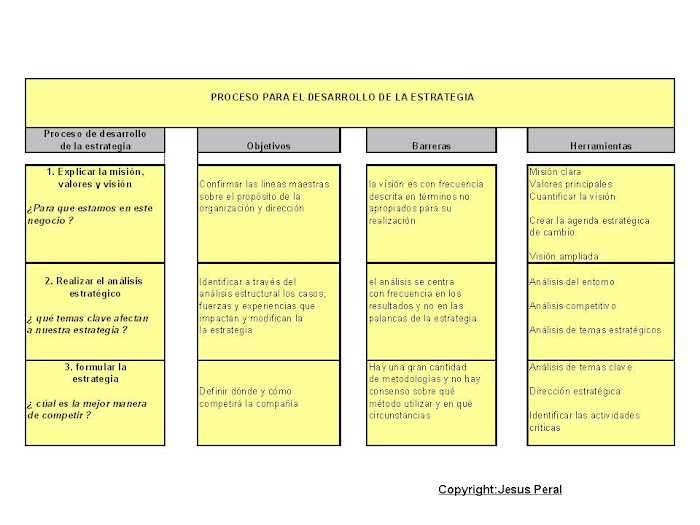
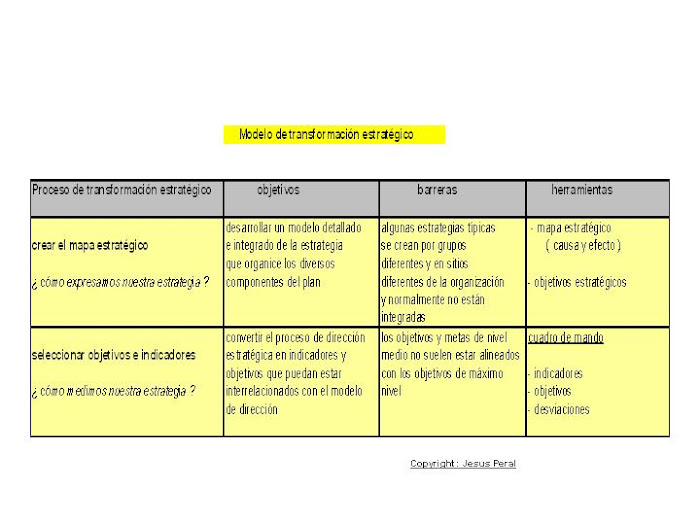
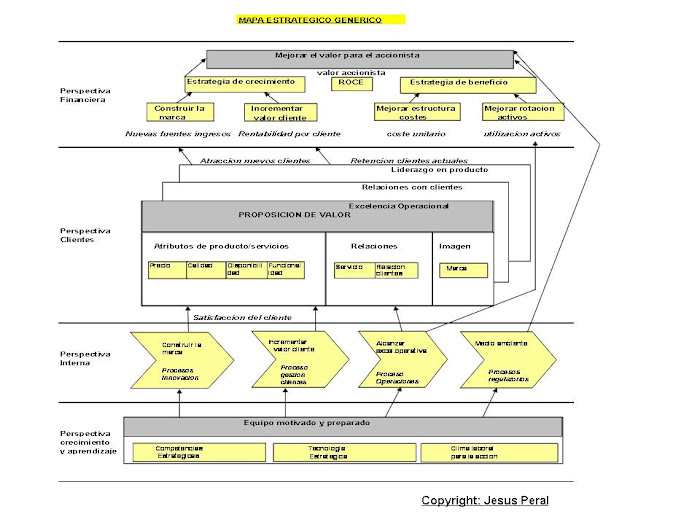
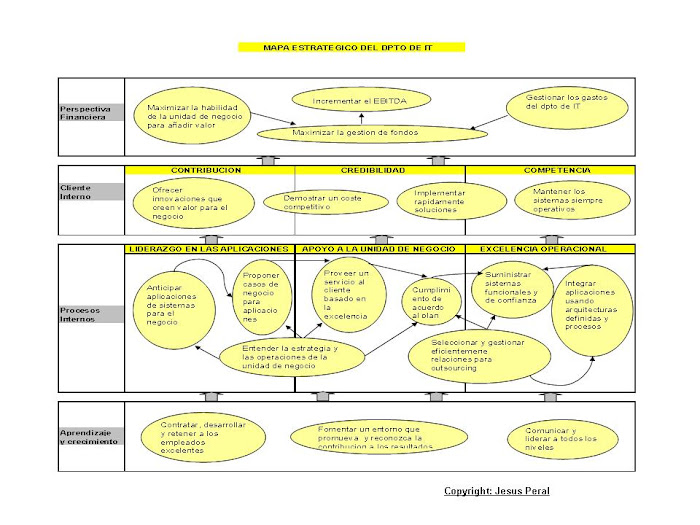
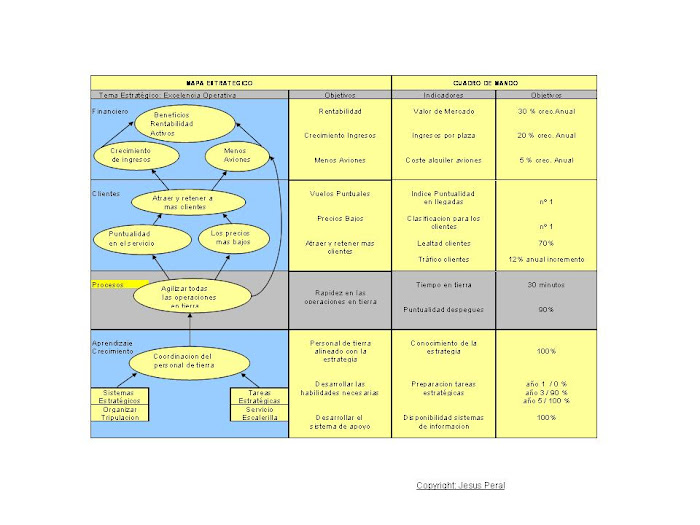
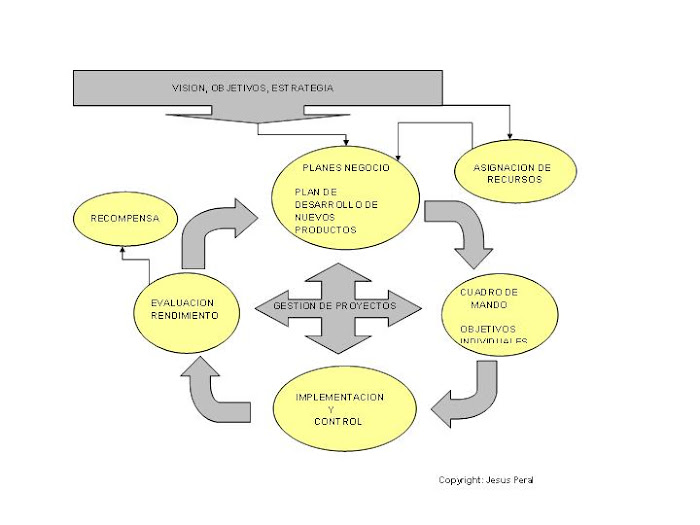
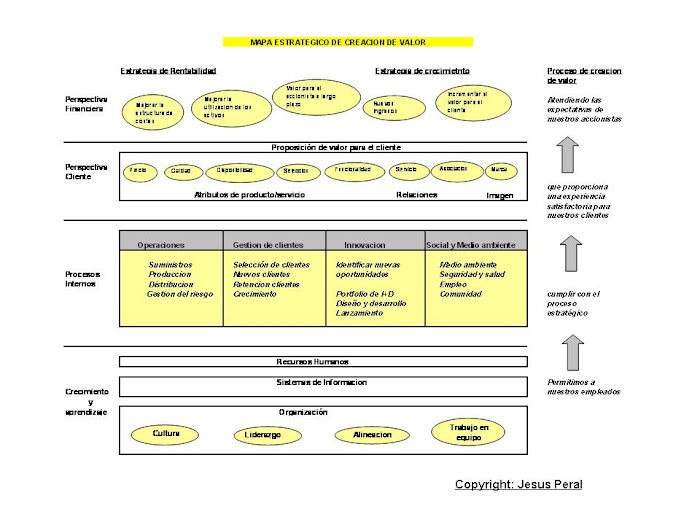
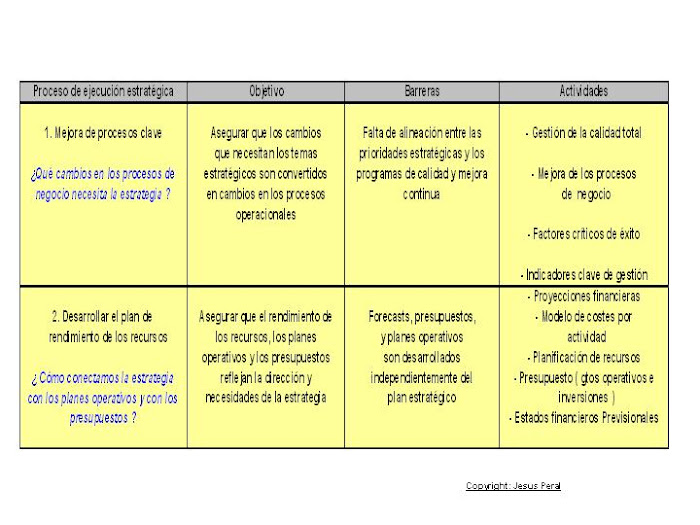
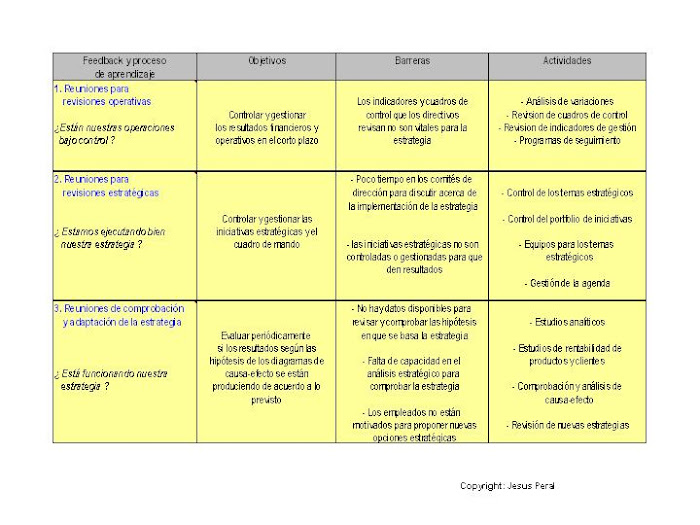
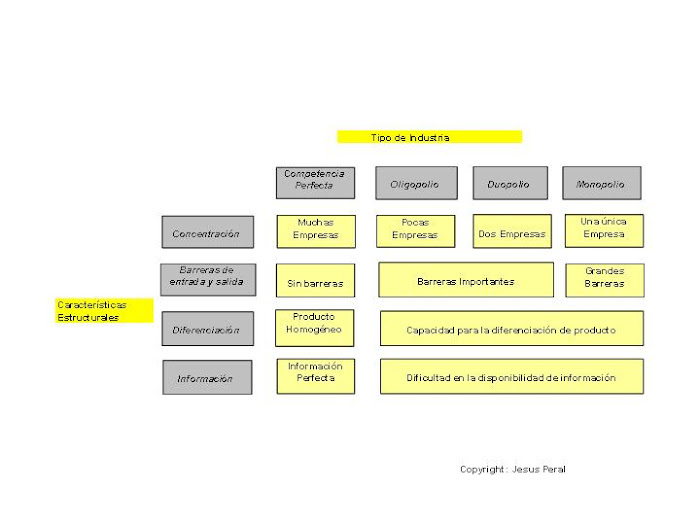
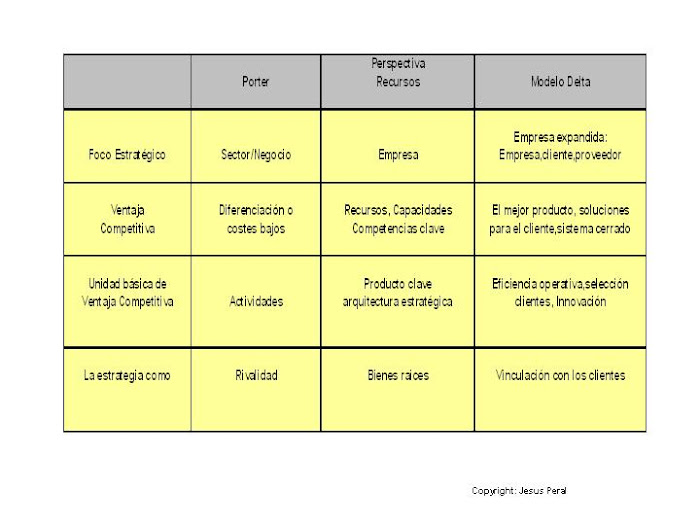
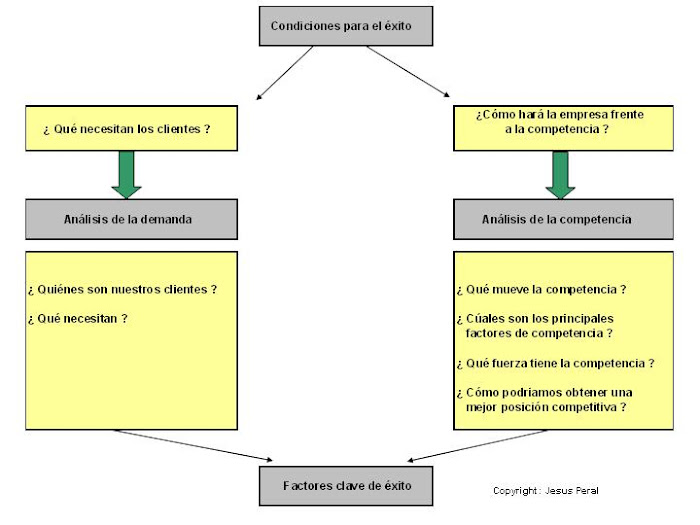
Find at the end of blog all charts related to Strategic Management topics commented in the posts


Mapa Estratégico Genérico/Strategy Map

Mapa Estratégico Genérico/Strategy Map
Mapa Estratégico Completo

Modelo de Dirección Estratégica/Strategic Management Model

Modelo de Dirección Estratégica/Strategic Management Model
Modelo desarrollado en las entradas 1 a 100. Ver archivo del blog
Búsqueda personalizada

martes, 23 de junio de 2015

Leading by example: challenging coherence


The most difficult situation of someone who has the responsibility to be in charge of a team, as a leader, responsible o director, is to maintain aligned and coherent behaviors with the expectations of the observers for the daily performance.

In many occasions we have listened the expression “we lead by example”, but maybe we did not go deeper in the scope and sense this expression has for the organizational culture and for the management processes of the organization.

To be an example also means there is a fact that has to be followed or rejected and therefore those being an example must comply with some characteristics. I would like to stress the difference between setting an example and being an example as the conceptual implications are very relevant since set is a presentation of the ideal which must be done in reference of something whereas be refers to the actions that have to be imitated, replicated or followed by other members in the organization.

The example, in terms of behavior, is a conscious and deliberate action that intents to be followed and based on that we could question the validity of a leadership where the example is not derived from a personal and profound conviction to reinforce the action but to the contrary it could become a mask of incoherence and therefore it does not show the reality of the real meaning of the proposed action.  In other words, the leadership must go beyond  the example and have to include the possibility of the mistake as the leadership is neither to be an example nor to set an example but transforming by example, with the possibility that management becomes a new experience for all the members of the team.

Leadership is a necessary component in the processes of transformation and the example is an option which is available to be taken, improved or changed in a way the results meet the expectations and the goals of the organization.

domingo, 31 de mayo de 2015

How to achieve organizational effectiveness


If we asked successful CEOs about the meaning of organizational effectiveness we would find different definitions but the most accurate one will be found inside the company and in the way it manages the current business environment.

Nowadays, apart from having a good business plan, all companies require an effective and efficient plan describing any single aspect the company has to take into account to achieve the organizational effectiveness. The project should be clear and should allow the assessment of the performance by comparing the KPIs most applicable to the organization.

The senior management leadership will allow the execution of both plans. The management style should flow top-down fostering a results-oriented organizational culture and the development to the execution capacity.

To know if the company has achieved the organizational effectiveness we must monitor if the current results are relevant for creating value and are coherent with the vision.

In the current economic environment all changes are very rapid which proves the responsiveness, utilization and adaptation to the emerging opportunities. With this regard, by knowing how to measure and adjust the action plan based on the perceived value for all the stakeholders is evident that the company will learn, as the vast majority of employees will be receptors and actors of the change that is required.

In my opinion this is the only way to manage the transformation, which is the result to achieve the organizational effectiveness. The organizational effectiveness is a direct result of the interaction of processes, system, risks, structure, culture, people, etc in a way the company is developed by putting in action some critical elements as follows:

·         The dynamic nature of short and long term objectives outlined in the strategic process

·         The focus on the customer

·         The alignment of goals, objectives, incentives, and people

·         The leadership of senior management impacting the results

·         The alignment of the talent to the critical positions to have the right people in the right roles

·         The assessment of the performance at all levels

·         Identify potential improvements and carry out those improvements

The action plan should include the intelligent management of all risks, innovation, take advantage of the big data, problem solving scenarios, continuous improvement and the adaptation of the activities leading to the strategic goal, as this is the only way to be better than the competitors  in the market place and in addition to achieve a superior performance.

The action of all the above elements implies a strong commitment from senior executives and other management levels to make things happen in the right moment and with the available talent. Just to remember an organization is simply a group of people, the human capital, so each person can contribute to the effectiveness by developing the talent and skills.

If the organization has capable and committed employees those employees should lead the more important activities so less capable employees are challenged and therefore prompted to leave their comfort zone creating a culture focused on accomplishment, results and rewards Needles s to say that the satisfaction at work, the motivation and the commitment have to be protected to shape the ideal organizational culture in a healthy manner.

Finally, just to indicate, that organizational effectiveness is simply the harmonic relationship between focus, alignment and results in all the functions which leads the organization to work successfully as a whole bringing the organization close to its vision.

domingo, 24 de mayo de 2015

Can finance department create value ? Yes, we can


Sometimes when a CFO takes charge of the finance department he/she is facing the boring task of being a simple tool for the company placed aside of the business and even to be considered the necessary bureaucracy to be run in parallel to the core business.

Although the above-mentioned scenario is changing very rapidly nowadays it is on the hands of the finance community to do a radical change and show that our department is really a profit center supporting the business potential.

In this post I intent to share some ideas which I consider are critical to cope with the so-called finance transformation.

Let me start with a simple statement:  which is more important “earn money” or “have money “?  Have money, no doubt.

We, as finance experts, know that earn money does not necessarily means we have money in the company. And when we decide to have it, we aim not to have money in excess (idle money) but having the minimum to run operations and get some additional debt capacity.

Within this process one of the most important goals would be to improve the image perceived from third parties about our performance to gain credibility. This would include our relationships with customers, suppliers, communication with internal customers, financial institutions etc.

A second goal is clearly to manage and reduce the finance charges and expenses. Here it is important to increase our negotiation power in front of our sources of funds, typically banks and other financial institutions. Create a balanced scorecard showing clearly our targets and measuring the deviations and achievements would be really helpful.

In terms of reducing administrative costs it is important to standardize and automate where possible finding areas of continuous improvements and being focused on what actually matters to support business and add value to the organization.

The finance team has to be motivated and proud to belong to this function. We need to foster mentoring and coaching and allow the reconciliation between our personal and professional life.

One aspect which normally is not taken into account is to determine our internal customer and how we need to manage our relationships. This is an important element for creating value. For example, we could help the sales function by offering alternatives to gain share of business in external customers. In other cases we can provide a quick valuation of the feasibility of a particular capital investment project. Receive a periodical feedback of our performance from our internal customers will allow us to find areas of improvement. Innovation is also a magical tool.

Too often, finance transformation initiatives either focus on creating efficiencies, for example, to reduce costs and remove non-core activities, or becoming more effective, for example, delivering more insightful analytics or providing better business intelligence. In my opinion, the effective and efficient are not mutually exclusive strategies.

Finally I would like to stress that transformation objectives have to be designed to achieve both efficient and effective results. While some initiatives will be focused on effectiveness and  others towards efficiency both should be balanced in order for the global finance function to be properly transformed and with the aim of the value creation. Many of the current successful transformation strategies focus on increasing the overall effectiveness of the finance function reducing simultaneously costs and complexity. But these efficiency driven objectives are often posed by reducing the headcount, which is an error in my honest view. To the contrary this should be balanced against the potential value creation opportunities that could be generated by those people, for example, managing better the processes and volume of data in the reporting periods and changing the focus from data gathering to the analysis of information.

lunes, 18 de mayo de 2015

Management control and its impact on strategy and performance


To maintain a competitive position a company has to generate the information necessary to define and implement its organizational strategies. Strategy is the connection between company´s goals and objectives and the operational activities executed to achieve corporate performance and growth. In the current global environment it is indispensable to be sure that such connection exists.

In my view, strategy is the art of creating value. It provides the conceptual models, intellectual framework and governing ideas that allow the leaders of the company to identify opportunities for bringing value to customers and for delivering such value in terms of profit. Based on this, strategy is the way a company defines its business and put together the main two resources that really matter in the current economy: knowledge and relationships or in other words, the competencies of the organization and its customers.

The achievement of a strategy takes back in consideration the different management horizons. At strategic level, settles the goals and objectives in the long term elaborating the strategic plan. At the operational level, we can place the budgetary process which translates into practices the established goals and objectives in the short term by preparing the budget and operational plan.

The management control acts in both horizons. The management control allows the leaders to perform strategic analysis on issues such as, determining the core competencies and constraints from a cost-benefit perspective and assessing the positive and negative financial and non-financial factors of strategic and operational plans.

Within the organizations the performance measurement has been dominated by management control processes focused on control and then improvement. Performance measures goes beyond the boundaries of traditional management accounting and could be achieved by finance teams having better understanding of the operational activities of the business and building this understanding into the design of new control processes, linking the control systems with the business strategy and focusing on the external environment within the business operates, through a value chain based approach.

The strategy of the organization has to be appropriate for its resources and objectives. The process involves matching the company´s strategic advantages to the business environment the organization is facing. A critical objective for an overall strategy is to put the company into a position to conduct its mission effectively and efficiently. A good corporate strategy should integrate the organizational goals, policies and tactics into a whole and should be based in business realities. With this regard the performance measurement system should encourage the leaders to act in the best interest of the organization supporting the mission and competitive strategies of the company.

As a conclusion I can say that management control is a core business function and should exist as a separate discipline within management field.

domingo, 3 de mayo de 2015

How to build a world-class finance organization


The role of finance organization historically has focused on oversight and control and paying less attention to increasing the effectiveness of its operating divisions.

However there were a lot of dramatic changes in the business environment driving finance organizations to reevaluate this role. The increased competition emerging from a global market has put pressure on finance organization to find new ways to reduce administrative costs, add value and provide a competitive advantage. At the same time the advantages in information technology have made it possible for finance function to shift from a paper-driven, labor intensive clerical role, to newly consultative roles as strategist, analyst and business partner.

Based on the above, the question would be, how could we create the so-called world class finance organization? In this post I would like to share my view based on my extensive experience in the finance function.

A world class finance organization can be best defined in terms of the business outcomes it generates, for example, improved business analysis, innovative solutions to business problems, reduced operating costs and improved overall business performance. At this point it is important to stress the relevance of what I call the “shared vision”. This shared vision includes the mission, a vision for the future, core values, goals and strategies which will lead to make the finance organization a value creating, customer focused partner in business results.

To achieve this position it is indispensable to be focused on some critical success factors, goals and best practices that are instrumental to attain the vision and create value.

The critical success factors should include:

·         Leadership/culture

·         Organization/customers

·         Technology/processes

·         People/talent

The goals have to be clear and achievable, for example:

·         Make the financial management a priority across the organization

·         Redefine the role of finance function

·         Provide meaningful information for the decision making process

·         Build a team that delivers results

The best practices are more difficult to find but are critical to achieve the vision and excellence, just to mention:

·         Build a foundation of control and accountability

·         Use training to change the culture and engage line managers

·         Assess the finance organization´s current role in meeting the mission and objectives

·         Maximize the efficiency of the daily accounting activities

·         Organize finance to add value

·         Develop systems that support the partnership between finance and operations

·         Reengineer the processes in line with new technology

·         Translate financial data into meaningful information

·         Develop a finance team with the right mix of skills and competencies

·         Build a finance organization that attracts and retains talent

The conclusion is very straightforward, we can achieve the excellence in the finance function in our new challenging and demanding role but it is crucial the CFO mindset is changed and focused on facilitating the above-mentioned elements to support the “shared vision”.

domingo, 19 de abril de 2015

Short guide for business and financial analysis


Sometimes we are very busy fire-fighting and troubleshooting and therefore we have no time to analyze how the business is performing both operationally and financially.

In this post I would like to share my simple and short model to cope with the above mentioned situation. Obviously you don’t need to follow all. There are no fixed rules, just use common sense and check how the movements in both Balance Sheet and P&L are related.

First of all we need to minimize the effort: concentrate in “big numbers”. Use just a few ratios and only those you really understand the meaning. Look at the evolution and compare them with the competitors.

I will start for the analysis of the business as follows:

Sales/Commercial management and market

·         What do we sell ? What is our level of revenue? Did we have sales growth ? which is the impact in our operating needs of funds ?

·         Are our sales seasonal ? Check operational risk

·         To which customers do we sell? Big customers, small customers, many, few, etc. Check reliability and strength of those customers.

·         Competitors ? many ? strong? Focused on price ? on quality ?

Production management/Vendors

·         How is the production? Uniform or seasonal? Based on orders?

·         Production process: long or short? Check impact in inventory

·         Which the importance of the vendors ? many or just a few? Are the vendors stronger than us?

Senior Management/strategy

·         Is the senior management doing well?  We need to understand the impact of potential problems in the management decisions in a particular period in our balance sheet and profit and loss account. For example, what will be the impact in our balance sheet if the sales are seasonal? And if the production process is long? Or if we experience a decrease in our sales.

Now it´s time to look at the profit and loss account to review profitability

·         Sales. Growth, seasonality, variability

·         Key figures in the P&L. “Big numbers” which is critical? Check how the Margin, EBITDA, return on sales have changed as percentage of sales. Compare with main competitors.

·         Financial expenses, simple ratio EBIT/Interest charge

·         Did we have profit? Check ratios, return on equity, return on assets and analyze the size of the profit.

·         Risks: which is the change in profit when key figures are not doing well?

Balance sheet analysis/Financial situation

·         Big numbers in balance sheet. If our business is seasonal we need to identify the key periods, for example, the period with maximum cash and with maximum accounts receivable balances.

·         Identify the “big numbers“ in the balance sheet. It is likely you will find the problem, if any, here. We can do a short balance sheet. Assets: operating needs of funds + Fixed assets. Liabilities: debt + Equity

·         What has happened? We can use our cash flow statement. We can compare the period with one considered very good for the business. Just concentrate in the relevant differences as here we will have the problems. So now we need to know why. We need to review the operational ratios.

·         We need to analyze the evolution of our operating needs of funds and the working capital. Maximum and minimum periods, for example. If we are shortage of cash this is due to the increase in our operational needs of funds or that our working capital has decreased. There is no other possibility.

·         If we increase our operating needs of funds the reason is we are collecting worse, we have more inventories, we pay quicker or we are growing too much, sales are lower, etc. We need to do a root cause analysis by using the operating ratios.

·         If working capital decreased it could be because our net equity is lower, due to dividends paid or losses, also it could be that our long debt is down or an increase in our fixed assets.

·         It is important to review potential risks in the balance sheet and the evolution of the operating ratios in comparison with the industry. The operating ratios evolution impacts our cash conversion cycle.

Finally we should perform a quick review of the value chain which is associated to how we build our return on equity. This ROE is our margin x turnover x leverage. If we simplify the calculation of these 3 components we will end up the ROE is net profit/net equity. The action here is how to increase ROE. Normally there are 3 things to do:

·         Increase ROS ( return on sales) by increasing margins or reducing operating expenses

·         Increase turnover, by selling more using the same level of assets or selling the same using less assets so being more efficient.

·         Increase leverage, using less equity and more debt or the so-called spontaneous financing.

martes, 7 de abril de 2015

Annual business plan: what readers of the plan will look for

This is the first post published directly in English in my blog. From now on I will combine posts in English and in Spanish as it has been demanded by the followers of the blog.

It is likely that depending on your fiscal year end you will start to prepare your annual budget or plan shortly. As every year the plan will finally be presented to a group of stakeholders or even to investors outside the organization.

In this post I would like share my experience gained in different organizations and some important factors when presenting this document.

Assuming you know who is going to receive your plan, your first challenge is ensuring that it is read. This is why the presentation and executive summary have to be good. It is highly unlikely that anyone will read the plan to the beginning to the end.

If the plan is for internal purposes you should be confident that a plan for this use will be given some attention. You can also be certain that the plan will not be read in their entirety either. The best you can hope for is that readers will grasp some good points from the plan before the next meeting in the boardroom or in the CEO office. You don’t want casual readers to find things that they can readily pick on and criticize. Hence my advice would be, think about the people who will be sitting around that “polished table”.

With the personalities of your organization in mind, read the plan again and try to see where your opponents might find ammunition. Consider if you have mistakenly overemphasized a weakness or an uncertainty or whether you have made assumptions that can be torn apart. If possible discuss the plan with your direct boss to see where he or she finds weaknesses and where you can look for support.

If you are fighting in a tough “political atmosphere” don’t let your plan be discussed too freely in advance. Too much idle chatter give your opponents time to formulate strategies. Don’t show everyone your hand or your best ideas will turn on the boss´s desk in someone else´s memo two days before you can present your brilliant business plan.

But, who are the group of people that could be sitting in the conference table?

First of all ,the decision-maker.  Even if the EVP or CEO makes the decision, it might be based wholly or partly on feedback or recommendation from others therefore don’t focus on the head of the table to the exclusion of all others.

In the second position, let´s say, the influencer. Frequently there is a “wise man” exerting strong influence on the decision-maker. Win the influencer´s support and you might win the battle.

Next, your direct boss. In this case you can usually expect a constructive attitude from this person and you are strong if he or she is the key influencer.

And finally, my most like group. The opponents, the nasty “point-scorers” and the supporters.

It is likely you will have some opponents. They might be motivated by personal grudge against you, “personality disorders”, ambition or maybe “their divorce” is making them grouchy. Whatever the cause, they will pick up on anything negative in your business plan.

What to say about the point-scorers. There are invariably a few people knocking around   your company who spend their time looking for an opportunity to look good in front of the bosses or otherwise “score points”, even if it means wrecking a perfectly reasonable business plan just because it was not invented by them.

Finally, your fellow contributors, directors or managers that will gain from the plan and if this plan is sound are likely to be generally positive. But watch out for unexpected point-scorers and those with hidden agendas. Don’t rely on goodwill or friendship for getting support, prefer facts and good arguments.

Every reader will want to see you are presenting an attractive business and the track record is of overwhelming importance.